Key Takeaways:
- President Trump’s “Liberation Day” tariffs, announced on April 2, 2025, shocked markets with an unexpected 10% baseline rate on imports.
- China retaliated swiftly by imposing 34% tariffs on U.S. goods, escalating global trade tensions.
- U.S. indices—Dow, S&P 500, and Nasdaq—suffered historic losses, with the Nasdaq entering bear market territory.
- Despite strong job numbers, investor sentiment remains clouded by recession fears and economic uncertainty.
- Technology giants and the “Magnificent Seven” were hit particularly hard, adding to overall market volatility.
Tariff Shock and Global Retaliation
In early April 2025, global equity markets were thrown into chaos following President Donald Trump’s unexpected announcement of sweeping tariffs on all imports. Dubbed “Liberation Day” tariffs, these measures imposed a 10% baseline duty on goods entering the United States—far exceeding what investors had anticipated. The aggressive move was aimed at reducing the U.S. trade deficit and encouraging domestic production. However, the market reaction was immediate and severe.
China, one of the United States’ largest trading partners, quickly retaliated by imposing a 34% tariff on U.S. imports, effective April 10. This tit-for-tat response sent shockwaves through global markets, triggering a cascade of selling not only in the United States but also across Europe and Asia. European indices such as the FTSE 100 and CAC 40 fell sharply, while Asian markets like Japan’s Nikkei 225 and TOPIX experienced significant declines. The combined effect was an environment of heightened geopolitical tension and uncertainty that left investors scrambling for safe havens.
Market Plunge: Historic Two-Day Wipeout
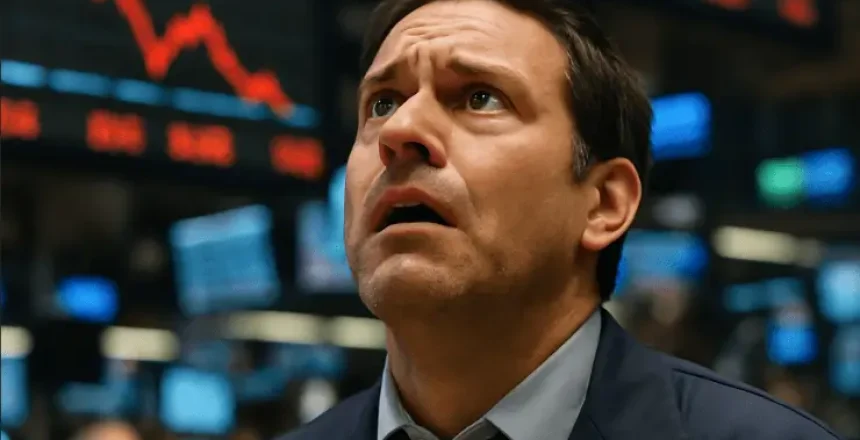
The selloff in U.S. markets reached unprecedented levels. On April 4 alone, the Dow Jones Industrial Average plunged by approximately 2,200 points, the S&P 500 dropped around 6%, and the Nasdaq Composite fell nearly 5.8%, with the latter entering bear market territory. Over just two days, about $6.6 trillion in market value was wiped out—a record loss in a very short period. Overall, since the beginning of Trump’s second term in January 2025, the U.S. market had lost roughly $11 trillion, marking one of the steepest declines in history.
This historic two-day collapse was primarily driven by the shock of the tariffs and the swift retaliatory actions from trading partners. Financial analysts pointed to the “tariff effect” as the catalyst for the rapid selloff. Investors, already jittery from months of uncertainty, interpreted the aggressive trade stance as a harbinger of a potential recession. The sheer scale of the decline has forced market observers to compare this downturn to the dramatic losses witnessed during the 2020 COVID-19 pandemic.
Economic Indicators and Investor Sentiment
Amid the turmoil, economic data presented a mixed picture. On one hand, the U.S. labor market showed resilience—an unexpectedly strong March jobs report indicated that 228,000 new jobs were added, exceeding many economists’ forecasts. Despite this seemingly positive data, fears of a broader economic slowdown persisted. Federal Reserve Chair Jerome Powell warned that the combination of aggressive tariffs and escalating trade tensions could ultimately lead to slower economic growth and higher inflation. Powell’s remarks underscored the challenges facing policymakers, who now find themselves in a “wait-and-see” mode while uncertainty continues to grip the market.
Investor sentiment remained overwhelmingly negative. Despite some temporary recovery during intraday trading sessions—occasionally buoyed by comments from President Trump or isolated corporate news—the overall mood was one of panic. Global investors, confronted with the reality of a potential trade war, shifted their focus toward safe-haven assets such as government bonds and gold. Gold prices surged past $3,000 per ounce, reflecting growing risk aversion, while U.S. Treasury yields fell as investors sought the security of fixed-income investments.
Sector-Specific Impact and Retail Investor Activity
While the overall market was reeling, certain sectors experienced more pronounced impacts. Technology companies, in particular, bore the brunt of the selloff. The “Magnificent Seven”—comprising Apple, Microsoft, Alphabet, Amazon, Nvidia, Meta Platforms, and Tesla—registered significant declines, dragging down the broader indexes. These tech giants had been among the main drivers of the previous bull market, but now their heavy weight in the S&P 500 and Nasdaq intensified the losses. Investors’ growing unease over supply chain disruptions and rising production costs further amplified the downward pressure on these stocks.
In contrast, some retail investors saw the panic as an opportunity to “buy the dip.” Data from trading platforms indicated record levels of inflows as individuals sought to capitalize on the steep discounts. However, while this dip buying was notable, it was not enough to counterbalance the overall negative sentiment prevailing in the market. The volume of trading and extreme volatility underscored that institutional investors were largely liquidating positions amid the fear of a prolonged downturn.
Outlook and Future Concerns
Looking ahead, the prospects remain murky. The aggressive tariff strategy and swift retaliatory measures have not only undermined confidence in global trade but have also raised questions about the broader economic outlook. Analysts warn that if the trade war continues to escalate, it could usher in a full-blown recession. The potential for rising inflation, coupled with slowing growth, poses a significant risk to both corporate earnings and consumer spending.
Moreover, the historic losses in key indexes have led some market strategists to question the sustainability of the current bull market. With the Nasdaq now firmly in bear market territory and the S&P 500 and Dow also recording substantial declines, the stage appears set for a prolonged period of volatility. Investors are now closely watching upcoming economic data releases, including further employment reports and indicators of consumer sentiment, in hopes of gauging whether the worst of the market turbulence is behind us.
Despite the grim near-term outlook, some analysts remain cautiously optimistic. They point to historical precedents where sharp corrections were followed by modest recoveries, provided that policy responses—both fiscal and monetary—are appropriately calibrated. However, as long as trade tensions persist and the global economic environment remains uncertain, market volatility is likely to continue.