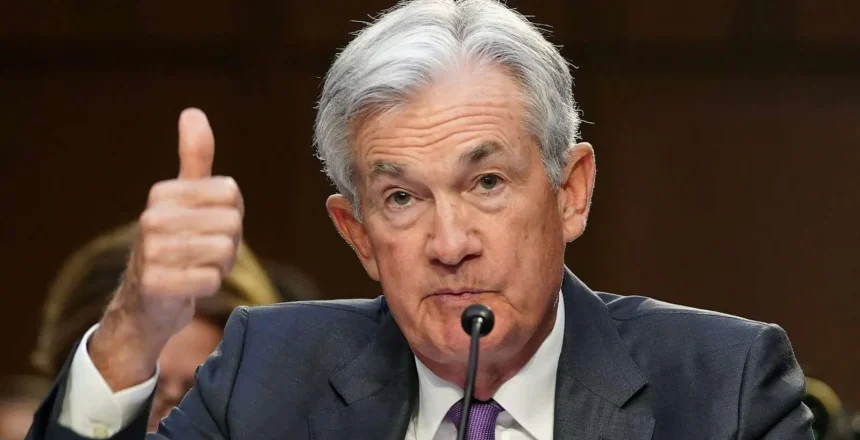
In its March 19, 2025 meeting, the Federal Reserve opted to keep the federal funds rate steady within the 4.25%–4.50% range—a decision largely anticipated by market participants. Despite signals that a rate cut could be on the horizon later this year, the committee’s cautious tone underscored a broader sentiment of uncertainty, primarily driven by the Trump administration’s aggressive tariff policies and their potential impact on the U.S. economy.
Key Takeaways
- The Fed maintained its benchmark rate at 4.25%–4.50% amid heightened uncertainty.
- Economic projections were revised downward: GDP growth now at 1.7% for 2025 and inflation raised to 2.7%.
- The Trump administration’s tariff policies are a central factor influencing economic outlook.
- Policymakers expect future rate cuts but are holding off until clearer data emerge.
- The pace of quantitative tightening will slow to alleviate market strains.
Economic Outlook: Revised Projections and Tariff Impacts
During the meeting, Fed Chair Jerome Powell and other policymakers presented revised economic projections. The central bank downgraded its outlook for U.S. economic growth, now forecasting a modest 1.7% increase for 2025, down from previous estimates of 2.1%. Concurrently, inflation expectations have been revised upward, with the preferred measure projected to finish the year at 2.7%—a slight increase from the earlier 2.5% forecast.
Powell attributed these adjustments in part to the impact of President Trump’s tariffs. The new import duties are expected to exert a dual effect: dampening growth by disrupting trade flows and supply chains, while simultaneously exerting upward pressure on consumer prices. This “stagflationary” scenario, where lower growth coexists with higher inflation, presents a significant challenge for monetary policymakers who must balance their dual mandate of achieving maximum employment and maintaining price stability.
Policy Decision: Maintaining a Steady Course
Faced with an uncertain economic landscape, the Federal Open Market Committee (FOMC) decided against altering the current interest rate. The decision reflects the committee’s “wait and see” approach—a cautious stance that allows additional time to assess incoming data before making further adjustments. Despite the downward revision in growth and the upward adjustment in inflation projections, most officials still anticipate the possibility of one or two quarter-point rate cuts by the end of the year.
In addition to the interest rate decision, the Fed announced a slowdown in its quantitative tightening program. Starting in April, the monthly reduction of its securities holdings will be eased from $25 billion to $5 billion. This measured approach aims to mitigate market volatility and ensure sufficient liquidity, as the economic environment remains mired in uncertainty partly due to unpredictable trade policies and other fiscal changes under the new administration.
Market Reactions and Investor Sentiment
Following the Fed’s announcement, U.S. stock markets reacted positively. Major indices such as the Dow Jones Industrial Average, the S&P 500, and the Nasdaq Composite recorded notable gains. Analysts pointed to the decision as a signal that the Fed is not in a hurry to reverse its current policy stance—an outcome that provided a temporary boost to investor confidence amid concerns of stagflation.
Fixed-income markets also benefited from the Fed’s careful approach. Benchmark Treasury yields, especially on the 10-year note, dipped slightly, reflecting an easing of pressure on the bond market. Meanwhile, investors continue to monitor potential shifts in the broader economic indicators that could eventually prompt a more decisive monetary policy move.
Future Prospects and Challenges
Looking ahead, the path for the Fed remains fraught with challenges. The uncertainty surrounding the effects of tariff policies means that policymakers must remain flexible. Powell’s remarks stressed that the Fed’s decisions will be guided by incoming economic data, with a particular focus on whether current inflationary pressures prove to be transitory or indicative of a more persistent trend.
Market analysts have noted that while the Fed is prepared to implement rate cuts if necessary, the actual timing and magnitude of these adjustments will largely depend on how the inflation–growth trade-off unfolds in the coming months. The delicate balancing act involves weighing the risk of a deeper economic slowdown against the possibility that inflation may remain stubbornly above the 2% target.