Key Points
- It seems likely that the US will impose 104% tariffs on Chinese imports starting April 9, 2025, as announced by the White House Press Secretary.
- The evidence leans toward this decision following China’s failure to remove its 34% retaliatory tariffs by the noon EDT deadline on April 8, 2025.
- Research suggests this escalation could impact global trade, potentially raising prices for consumers and disrupting supply chains, though opinions vary on long-term effects.
Announcement and Timing
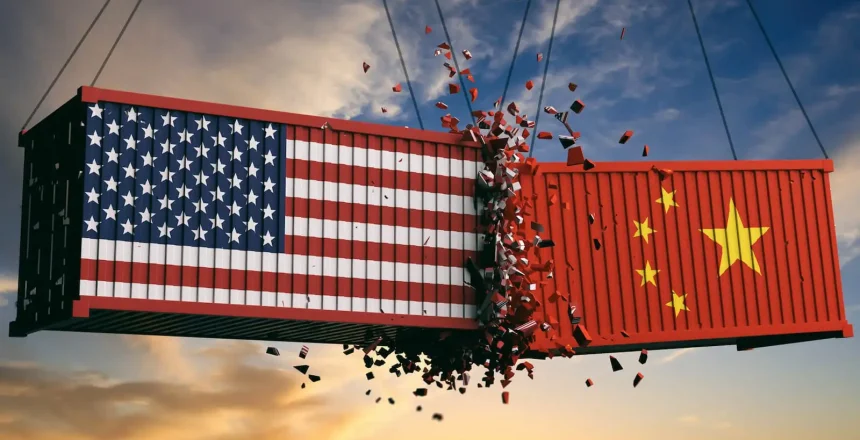
On April 8, 2025, at 11:00 AM PDT, the trade landscape between the United States and China saw a significant escalation with the White House announcing the imposition of 104% tariffs on Chinese imports, set to take effect from 12:01 a.m. ET on April 9, 2025. This decision, confirmed by White House Press Secretary Karoline Leavitt, follows China’s failure to meet a noon EDT deadline on April 8 to withdraw its 34% retaliatory tariffs on US goods. This development marks a critical juncture in the ongoing trade war, with potential ramifications for global economic stability.
The announcement aligns with President Donald Trump’s aggressive trade policy, which has seen multiple tariff impositions in recent months. The context is rooted in long-standing disputes over trade practices, with the US accusing China of currency manipulation, intellectual property theft, and unfair subsidies, while China has countered with its own measures, escalating tensions.
Background and Historical Context
The trade dispute has been brewing for years, but recent actions have intensified the conflict. In March 2025, the US imposed a 20% tariff on all imported goods, including those from China, as part of a broader trade policy overhaul. On April 2, 2025, President Trump announced an additional 34% tariff specifically on Chinese goods, bringing the total to 54% for those imports, citing chronic trade abuses. China responded on April 4, 2025, by imposing a 34% tariff on all US goods, mirroring the US action and deepening the tit-for-tat retaliation.
President Trump then set a deadline for China to withdraw its retaliatory tariffs by noon EDT on April 8, 2025, threatening an additional 50% tariff if unmet. This would elevate the total tariff rate on Chinese imports to 104%, combining the existing 20%, the April 2 announcement of 34%, and the new 50% penalty. Given the current time is 11:00 AM PDT on April 8, which is 2:00 PM EDT, the deadline has already passed, confirming the tariff imposition.
Detailed Announcement and Timing
The White House Press Secretary’s confirmation came during a briefing on April 8, 2025, with Leavitt stating, “They will be going into effect at 12:01 a.m.,” referring to the start of April 9, 2025. This timing, at midnight ET, aligns with standard practice for tariff implementations, ensuring a clear transition. The announcement was reported across multiple sources, including ABC News and The Guardian, providing corroborative evidence of the decision.
The tariff structure is as follows, based on the announcements:
| Tariff Component | Rate (%) | Effective Date |
|---|---|---|
| Existing Tariff | 20 | Prior to March 2025 |
| Additional Tariff | 34 | April 2, 2025 |
| New Retaliatory Tariff | 50 | April 9, 2025 |
| Total Tariff Rate | 104 | Starting April 9, 2025 |
This table illustrates the cumulative effect, reaching 104% as confirmed by multiple reports, such as Yahoo Finance and The Independent.
Implications and Economic Impact
The imposition of 104% tariffs is poised to have significant economic consequences. For American consumers, this could mean higher prices for a wide range of goods, including electronics, clothing, and furniture, as the cost of importing from China increases substantially. Businesses reliant on Chinese manufacturing may face increased production costs or be forced to seek alternative suppliers, potentially disrupting global supply chains. Economists, as noted in Reuters, warn of potential inflationary pressures and reduced economic growth, with companies like Micron already planning tariff-related surcharges.
On the global stage, this escalation could lead to further retaliatory measures from China, deepening the trade war. Reports suggest China has vowed to fight back, potentially affecting other nations dependent on trade with both economies. The market reaction has been volatile, with stock indices experiencing sharp declines, as seen in CNBC reports, reflecting investor uncertainty.
Reactions and Stakeholder Perspectives
The announcement has elicited diverse reactions. Supporters of Trump’s policies, including some lawmakers on Capitol Hill, argue that the tariffs are necessary to address trade deficits and protect American jobs, as mentioned in POLITICO. Critics, however, caution that the move could backfire, leading to job losses in industries dependent on Chinese imports and exports, with Democratic lawmakers like Rep. Josh Gottheimer warning of higher costs for everyday goods, as noted in CNBC.
China has denounced the US actions as “economic coercion,” with officials indicating readiness to take all necessary measures to protect its interests, as reported in The Guardian. Other nations, such as Italy, are planning discussions with the US, with Premier Giorgia Meloni scheduled to meet President Trump on April 17, 2025, to address tariff impacts, according to [Bloomberg](via Reuters).