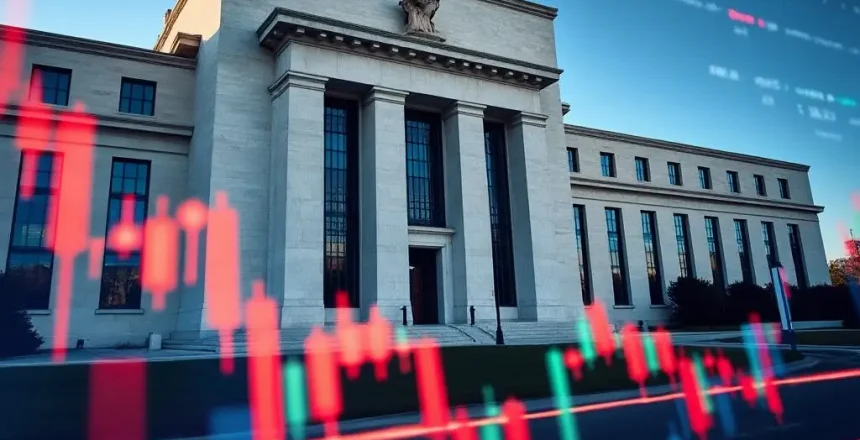
The U.S. stock market experienced a significant pullback this week as investors reassessed their expectations for Federal Reserve policy moves, with major indices surrendering substantial gains from their post-election rally. The shift in sentiment comes amid mixed economic signals and cautionary statements from Fed officials, highlighting the delicate balance between inflation control and economic growth.
Tech Sector Leads Market Decline
The technology-heavy Nasdaq Composite (NDX) bore the brunt of the selling pressure, tumbling 3.4% as major tech companies faced heightened scrutiny. Industry giants Meta (META), NVIDIA (NVDA), and Amazon (AMZN) all recorded notable losses, though Tesla (TSLA) managed to buck the downward trend. The broader S&P 500 declined 2.1%, erasing more than half of its recent post-election gains.
Fed Policy Outlook Shifts
Powell’s Patience Dampens Rate Cut Hopes
Federal Reserve Chairman Jerome Powell’s emphasis on patience in monetary policy easing has prompted traders to recalibrate their expectations. The probability of a December rate cut has declined significantly, dropping to 56% from 80% earlier in the week. This reassessment came as Boston Fed President Collins maintained that a December adjustment remains “on the table,” while Chicago Fed’s Goolsbee advocated for a measured approach, suggesting rates could decrease “substantially” over the next 12-18 months if inflation continues to moderate.
Corporate Developments
Mixed Performance Across Sectors
Applied Materials (AMAT) emerged as a notable underperformer, with shares plummeting following a disappointing revenue forecast, marking its steepest monthly decline. The healthcare sector also faced pressure as pharmaceutical giants Moderna (MRNA) and Pfizer (PFE) grappled with concerns following the appointment of vaccine skeptic Robert F. Kennedy Jr. to a prominent health policy position.
Economic Indicators and Bond Markets
Consumer Resilience Amid Uncertainty
October’s retail sales data exceeded expectations, though questions persist about the sustainability of consumer spending strength. The Treasury market reflected this uncertainty, with yields briefly touching 4.5% before settling at 4.44%, as bond investors found opportunity in the higher rates.
Global Markets and Currencies
Dollar Weakness Benefits Crypto and Foreign Exchange
The cryptocurrency market showed resilience, with Bitcoin (BTC) gaining 3.4% to trade near $91,200, though remaining below its recent record highs. Traditional currency markets saw the dollar’s dominance wane, as the euro maintained its position at $1.05 and the Japanese yen strengthened by 1.2% against the greenback.
Commodity Markets Under Pressure
Energy Sector Faces Demand Concerns
The commodities sector displayed weakness, particularly in energy markets, where WTI crude oil declined 2.4% to $67.02 per barrel amid growing demand concerns. Gold prices remained stable, as investors balanced inflation risks against interest rate expectations.
International Market Performance
The global market response was broadly negative, with the MSCI World Index declining 1.1%. European markets saw modest pressure on sovereign debt, with German 10-year bonds yielding 2.36%, while UK yields edged lower, reflecting the mixed sentiment in global fixed-income markets.