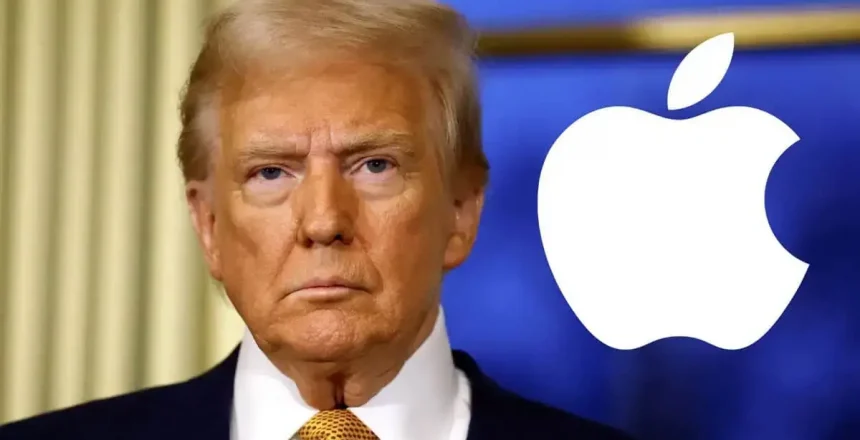
Key Takeaways:
- Trump has threatened a 25% tariff on Apple iPhones not made in the U.S., directly challenging the company’s global supply chain.
- Apple’s stock and broader markets fell sharply in response, highlighting investor concerns over rising costs and supply chain disruptions.
- Trump is also pushing for a 50% tariff on all EU imports starting June 1st, 2025, citing stalled trade talks and demanding unilateral tariff reductions from Brussels.
- These moves signal a renewed escalation in trade tensions, with potential for higher consumer prices, retaliatory measures, and global economic uncertainty.
Trump Reignites Tariff Talks
In the latest tariff-related development since the US-China tariff rollback, President Donald Trump has once again thrust tariffs into the global economic spotlight, this time targeting both Apple and the European Union with sweeping new threats. His latest pronouncements signal a renewed willingness to use tariffs as leverage in trade negotiations, with potentially far-reaching consequences for global supply chains, consumer prices, and international relations.
Trump’s Tariff Threats Against Apple
Trump announced that Apple would face a 25% tariff on iPhones not manufactured in the United States. In a post on Truth Social, he stated, “I have previously informed Tim Cook of Apple that I anticipate their iPhones sold in the United States will be manufactured domestically, rather than in India or anywhere else. Should that not occur, Apple must pay a tariff of no less than 25% to the U.S.”This move comes as Apple has been shifting some production to India in response to earlier tariffs on China and ongoing supply chain risks.
50% Tariff on EU Goods
Trump’s tariff rhetoric did not stop with Apple. He also threatened a 50% tariff on all imports from the European Union, set to begin June 1st, 2025, unless the EU makes concessions in ongoing trade talks. “Our discussions with them are going nowhere,” Trump posted, emphasizing his frustration with Brussels’ insistence on eliminating tariffs altogether while he seeks to maintain at least a 10% baseline tax on most imports.
The EU has so far declined to comment, but the threat marks a significant escalation in transatlantic trade tensions. Trump’s push for higher tariffs on EU goods—higher even than those on China—signals a hardline approach intended to force the EU into unilateral tariff reductions on U.S. products.
Economic and Political Implications
Trump’s renewed tariff threats are part of a broader strategy to pressure trading partners and encourage domestic manufacturing. However, the economic impact could be severe. Tariffs raise prices for consumers, disrupt supply chains, and create volatility in financial markets. Apple’s reliance on global manufacturing, especially in China and India, is now under direct threat, potentially leading to higher prices for U.S. consumers and further market instability.
For the EU, a 50% tariff would likely provoke retaliation, risking a full-scale trade war that could hit industries on both sides of the Atlantic. The move also complicates already fraught negotiations, with both sides far apart on key issues.