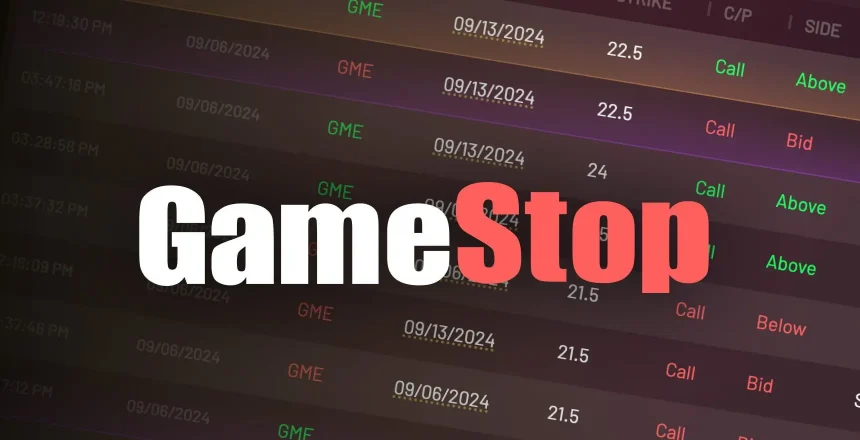
On September 5th, GameStop’s options market witnessed significant activity, with one transaction standing out. A notable trade involved the $22.5 call option expiring on September 13, 2024, which was purchased above the asking price and subsequently closed, yielding a quick 30% profit in a short timeframe.
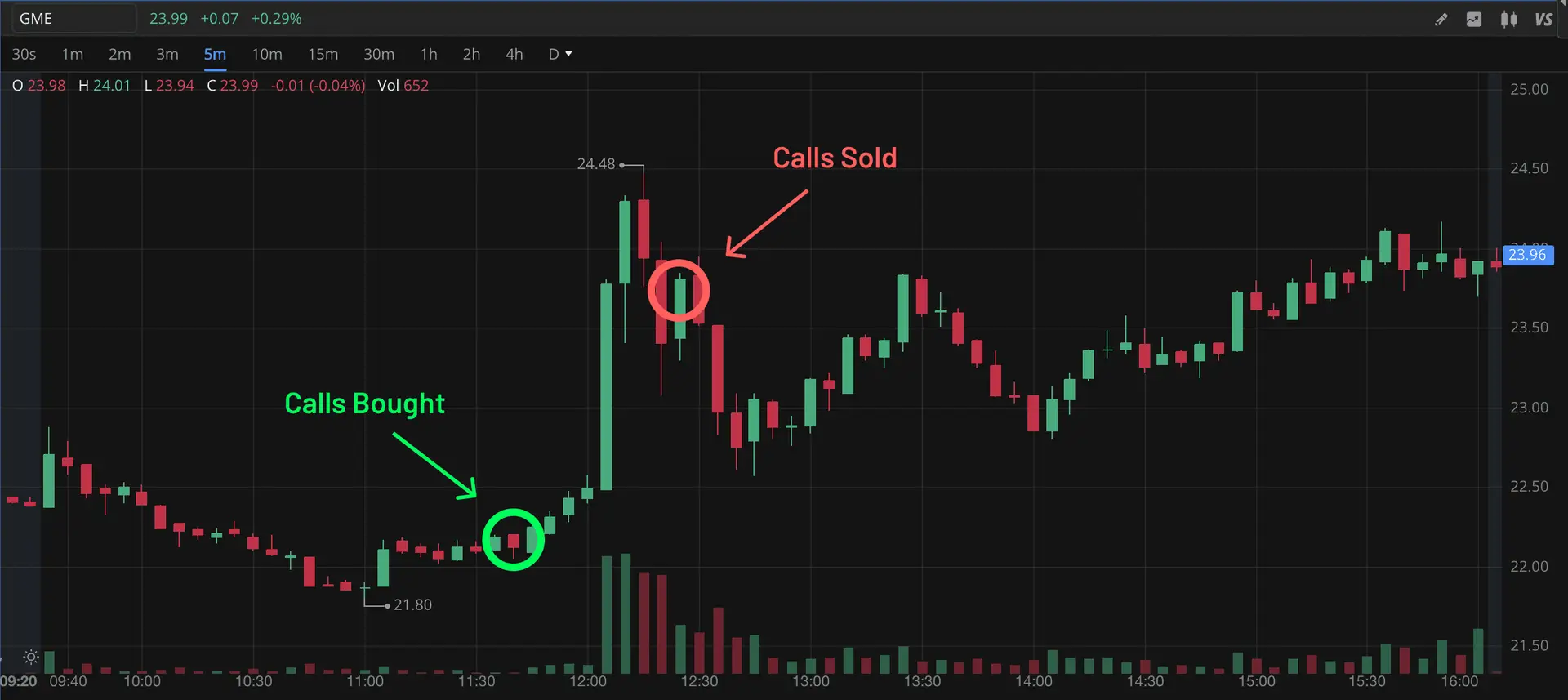
To understand whether this transaction represents a closing position by sophisticated traders or institutions (often termed “smart money”), a more in-depth analysis of the data is required. While there are multiple methods to interpret potential option closures, we’ll focus on the most fundamental approach in this article.
Trader showing urgency buying

The GME 22.5C 09/13/2024 order, marked as a call sweep (in green), was executed above the ask price. The trader paid $1.73 for the contract, surpassing the bid and ask range of $1.46 x $1.49. Additionally, the contract showed elevated implied volatility, standing at 138.50%.
For reference, a call sweep in options trading is when a trader instructs their broker to fill an order at the best available price, sweeping all liquidity across multiple exchanges. This strategy is typically bullish, as it signals the trader expects the stock to rise and wants the order filled quickly, often due to anticipated price-moving news.
Buying signal with volume and open Interest analysis
High unusual volume spikes in options contracts often indicate that someone is making a significant bet on the direction of the underlying asset. This can be based on either transparent or non-transparent catalysts. When the volume of an options contract significantly exceeds its average daily volume, it suggests that institutional investors or a trader(s) with potentially non-public information believe the price of the asset is likely to move substantially.
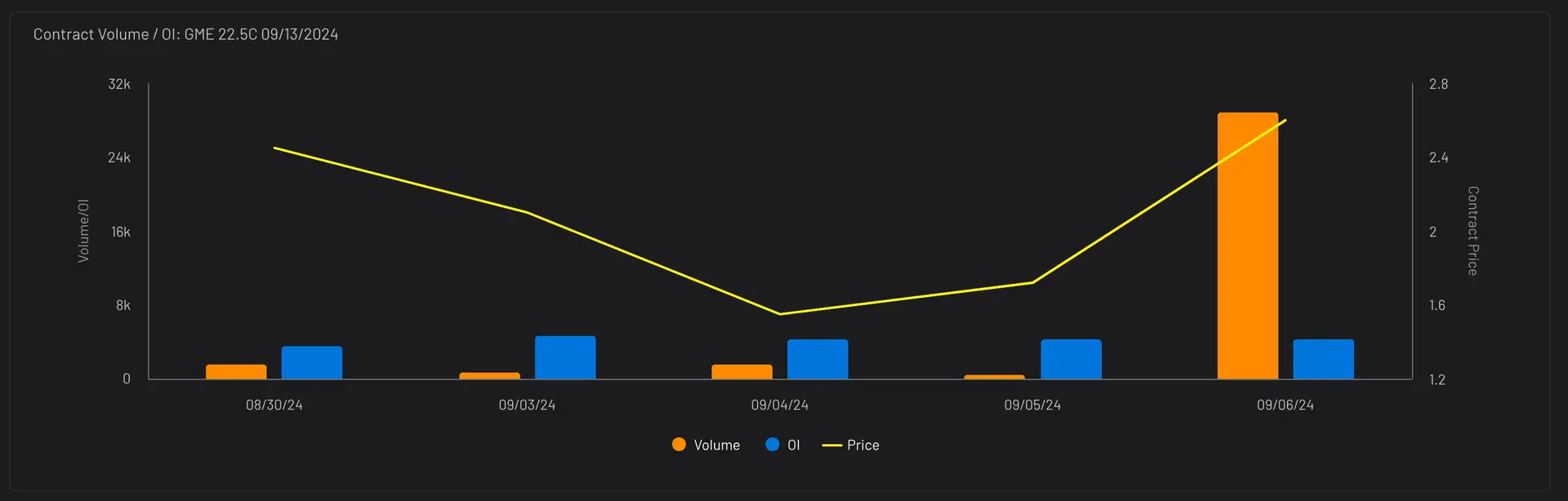
Looking at the GME 22.5C 09/13/2024 contract historically, its average daily volume over the past week was 1,011. However, it suddenly spiked to 29,000 contracts in a single day, signaling a significant bet on GME’s short-term movement.
A key observation is that when the contract’s size exceeds the open interest, it strongly suggests that the order is “opening,” meaning traders are likely buying into new positions.
Trader quickly closes out

Shortly after the initial trade, another transaction occurred 20 minutes later, this time hitting the bid side with the same contract details—GME 22.5C 09/13/2024 (highlighted in red). It’s highly likely that this trade was a position being closed for the following reasons:
- The same expiration and strike price were involved, indicating it could be the same trader who initiated the earlier buy.
- The trade was a block order, which is commonly used by institutional investors or large individual traders to exit substantial positions. Block trades often stand out due to their size relative to the typical volume.
- The contract price had risen to $2.25.
- Implied volatility had increased to 150%, a point at which traders frequently choose to sell, capitalizing on the elevated volatility.
In the context of options trading, the bid price is the highest price a buyer is willing to pay for an option contract. Conversely, the ask price is the lowest price a seller is willing to accept for the same contract. The bid is usually referred to as selling because it represents the price at which a trader can sell the option to a buyer who is willing to purchase it at that price. Essentially, if you are looking to sell an option, you would typically sell it at the bid price.
Other considerations
When unusual spikes in option volume occur, it’s essential to consider the possible underlying factors:
- Traders may be actively buying and selling the contract intraday, especially with short-dated expirations that experience high implied volatility and rising volume throughout the day.
- For contracts with short expirations that are showing elevated implied volatility and increasing prices, it’s often a sign that more selling is happening. Traders are likely taking advantage of improved liquidity, faster fills, and narrower spreads. This is particularly significant when the contract price has already made a notable upward move.
In this case, the GME trader provided us with two strategies: placing a large bet, selling half of the position shortly after, and holding the remainder for potential further gains as the contract approaches expiration, as shown in the image below.
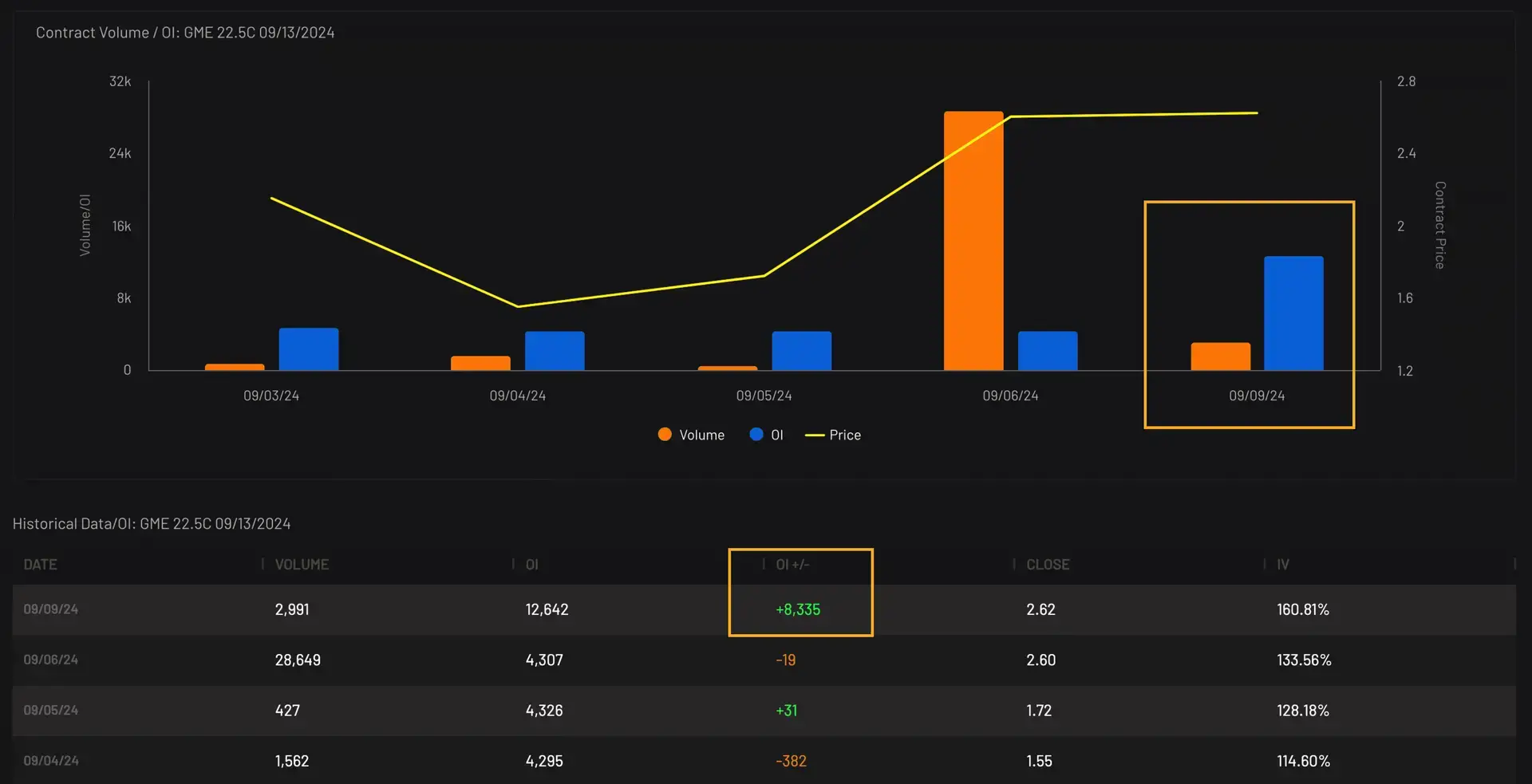
There were over 8,000 new contracts added GME 22.5C 09/13/2024 the next trading day (9/9/2024)
In conclusion
It’s important to note that no method is 100% accurate in determining if a trade is actually buying or closing. These indicators provide clues, but they should be used in combination with other analysis techniques for a more comprehensive understanding of options order flow.
Cheddar Flow assists in spotting closing positions in options order flow through its advanced market analysis and intelligent order tracking capabilities.