Wichtige Punkte
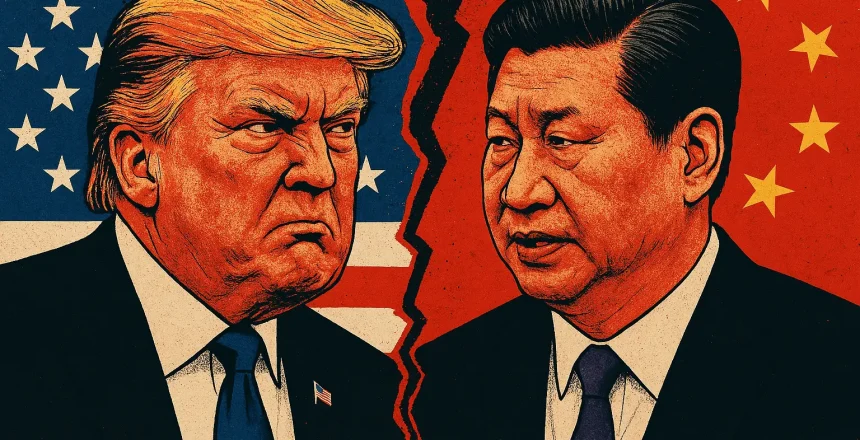
- President Trump raised tariffs on Chinese goods to 125% on April 9, 2025, while pausing new tariffs for most other countries for 90 days to allow negotiations.
- This decision led to a sharp rally in U.S. stocks after initial market declines, with the S&P 500 surging by 7%.
- China retaliated by increasing its tariffs on U.S. goods to 84%, escalating trade tensions.
The April 9 Announcement: Pause and China Exception
On April 9, 2025, at 12:37 PM PDT, President Donald Trump made a pivotal announcement regarding U.S. tariff policy, which included raising tariffs on Chinese goods to 125% and pausing new tariffs for most other countries for 90 days to allow for trade negotiations. This decision came in the context of an earlier announcement on April 2, 2025, where Trump had imposed a 10% baseline tariff on all imports and higher “reciprocal” tariffs on approximately 60 countries, initially setting China’s tariff rate at 104%. The rapid policy shift and its implications for global trade and markets are detailed below, drawing from recent reports and analyses.
Summary of Tariff Changes and Reactions
| Country/Region | Tariff Change | Effective Date | Reaction/Retaliation |
|---|---|---|---|
| Most Countries | Paused, 10% baseline maintained | April 9, 2025 | Willingness to negotiate (e.g., Japan) |
| China | Increased to 125% | April 9, 2025 | Raised tariffs to 84% on U.S. goods |
| European Union | N/A | April 15, 2025 | Preparing 10-25% duties on U.S. goods |
Background and Initial Tariff Announcement
The initial tariff plan, announced on April 2, 2025, introduced a 10% base global tariff effective April 5, with higher reciprocal tariffs for around 60 nations, including China, where the rate reached 104% by April 9. This was calculated as an additional 34% tariff on top of existing levies, reflecting Trump’s strategy to address perceived trade imbalances. The announcement triggered significant market turmoil, with U.S. stocks plunging and erasing trillions in market value, as investors feared economic repercussions. Economists warned of a potential severe global recession, with some investors describing the situation as an “economic nuclear winter”.
Market Reaction and Economic Implications
The financial markets responded dramatically to the April 9 announcement. After the initial tariff plan caused a market sell-off, the news of the 90-day pause for most countries, coupled with the specific increase for China, led to a sharp rally. The S&P 500 surged by 7% in minutes, reflecting investor relief at the prospect of avoided trade wars with major economies outside China. Commodities like gold and oil also saw significant gains, as risk appetite returned. However, the 125% tariff on China could lead to higher prices for American consumers, particularly for goods like electronics and clothing, and may result in job losses in industries reliant on Chinese imports. The pause for other countries might provide a negotiation window, but it also underscores the ongoing trade war with China, potentially disrupting global supply chains.
International Response and Retaliation
China swiftly retaliated against the U.S. tariff hike by increasing its tariffs on American goods from 34% to 84%, effective immediately, as reported in multiple sources. This escalation marks a new phase in the U.S.-China trade war, with potential for further economic fallout. The European Union and other trading blocs have begun preparing retaliatory measures, with the EU approving duties ranging from 10% to 25% on over $24 billion worth of U.S. goods, effective April 15 . Conversely, some countries like Japan and South Korea have expressed willingness to negotiate new trade deals, indicating a mixed global response to Trump’s policies.
Trade as a Negotiation Tool
Trump’s tariff strategy appears to be a calculated move to pressure countries into renegotiating trade terms more favorable to the United States. By pausing tariffs for most nations, Trump may be attempting to isolate China as the primary target, potentially rallying other countries against Beijing. However, the steep increase to 125% on Chinese goods could exacerbate existing tensions, with analysts warning of increased inflation, recession risks, and higher costs for U.S. families. The move also risks alienating allies and undercutting strategic efforts to contain China, as noted in recent analyses.
Key Citations
- Trump pauses reciprocal tariffs for 90 days for everyone but China | Axios
- Trump says he reversed tariffs because people were ‘a little bit yippy’ and ‘afraid’: Live updates | CNBC
- Trump tariffs live updates: Stocks surge after Trump announces 90-day pause | NBC News
- Trump hits pause on trade war | POLITICO
- Trump will pause tariff hikes for 90 days, but not for China | NPR
- Trump tariffs sow fears of trade wars, recession and a $2,300 iPhone | Reuters
- Tariff rates Trump ascribes to other countries are vastly higher than World Trade data shows | CNBC
- Stocks decline again on tariff uncertainty; Supreme Court rules in Alien Enemies Act deportation case | NBC News