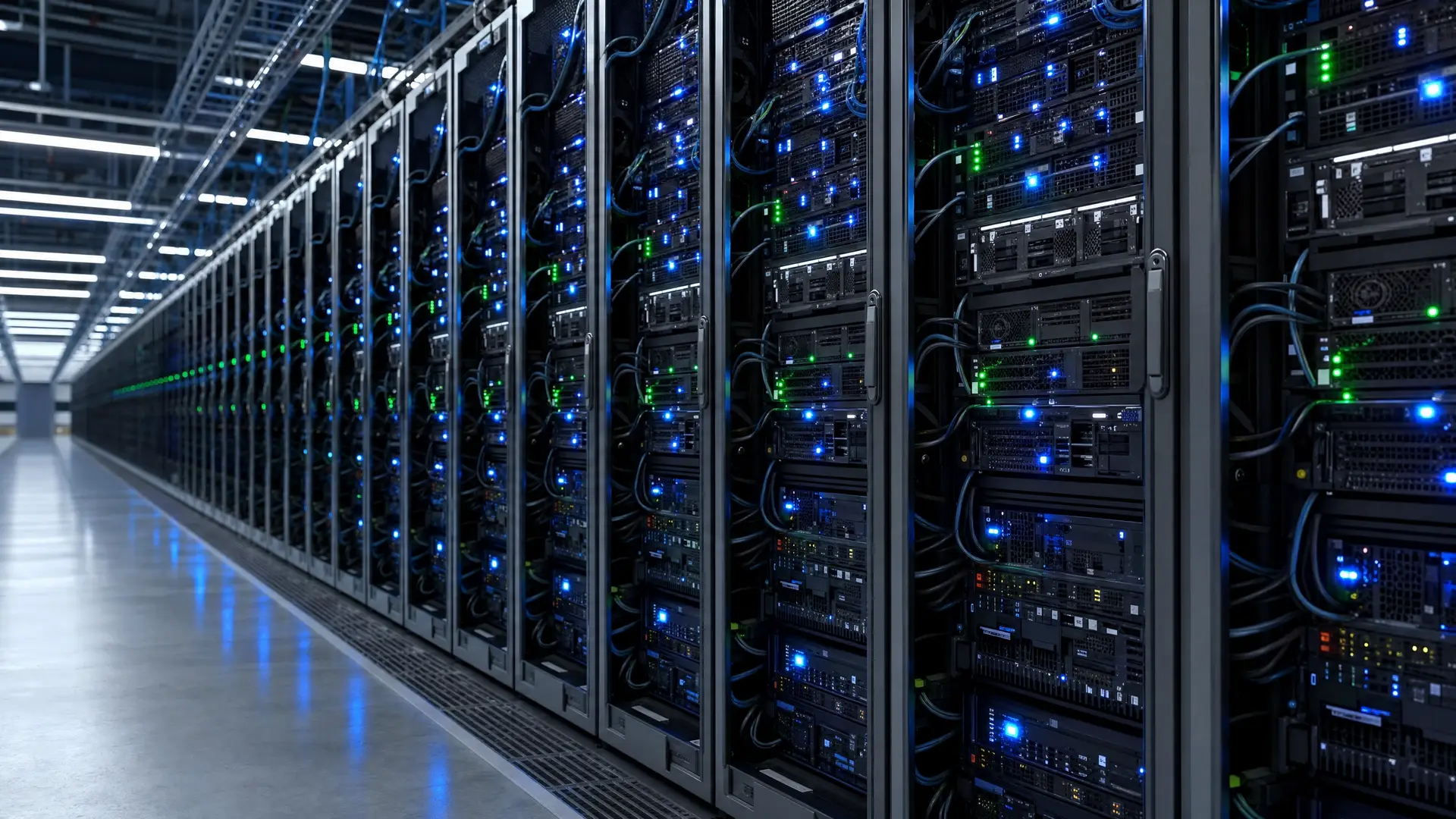
Artificial intelligence (AI) is transforming industries worldwide, driving a profound shift in how businesses operate and innovate. At the core of this transformation are AI infrastructure stocks—companies that provide the essential hardware, software, and connectivity solutions powering AI applications. These stocks span multiple segments, including semiconductors, cloud and data services, networking, servers, and data centers. Together, these companies form a robust ecosystem that underpins the AI revolution, making them critical enablers of digital transformation and innovation.
Semiconductors
Semiconductors are the backbone of modern electronics and are crucial AI Infrastructure Stocks, powering everything from smartphones and computers to automobiles and industrial machinery. They are materials with electrical properties that can be finely tuned to act as conductors or insulators, making them essential for creating integrated circuits, processors, and memory devices. Advances in semiconductor technology drive innovation across industries, enabling faster computing, improved energy efficiency, and new applications in areas such as artificial intelligence and the Internet of Things.
NVIDIA Corporation (NVDA):
NVIDIA is a leading designer of graphics processing units (GPUs) and AI computing platforms. Originally known for its gaming graphics cards, the company has expanded its reach into data centers, automotive solutions, and professional visualization, playing a critical role in accelerating deep learning and high-performance computing.
Broadcom Inc. (AVGO):
Broadcom designs, develops, and supplies a wide range of semiconductor solutions along with infrastructure software. Its products support data center, networking, broadband, and wireless applications. Broadcom’s portfolio includes custom chips for artificial intelligence applications, making it a key player in both the semiconductor and software spaces.
Marvell Technology Inc. (MRVL):
Marvell focuses on developing semiconductor solutions primarily for storage, networking, and connectivity applications. The company designs chips that power high-speed data transfer in cloud, enterprise, and consumer markets, helping to support the ever-growing demand for faster and more reliable communication.
Intel Corporation (INTC):
Intel is one of the world’s largest semiconductor manufacturers and is best known for its microprocessors that power personal computers and servers. In addition to CPUs, Intel develops a broad range of integrated circuits and technologies for data centers, artificial intelligence, and autonomous driving.
Advanced Micro Devices Inc. (AMD):
AMD is a major competitor in the microprocessor and graphics market, producing CPUs and GPUs for PCs, gaming consoles, and data centers. Its innovations in high-performance computing and visual processing have challenged industry incumbents and spurred advancements in energy efficiency and processing power.
Taiwan Semiconductor Manufacturing Co. (TSM):
TSMC is the world’s largest dedicated independent semiconductor foundry. It manufactures chips for fabless companies worldwide, enabling innovations in everything from mobile devices to artificial intelligence systems. TSMC’s advanced fabrication technologies are critical in driving the performance and miniaturization trends in modern electronics.
Celestica Inc. (CLS):
Celestica is a leading provider of electronics manufacturing services. While not a semiconductor designer or manufacturer in the traditional sense, the company plays a crucial role in the global supply chain by assembling and testing complex electronic systems that integrate semiconductor components for a diverse range of industries.
Each of these companies contributes uniquely to the semiconductor ecosystem, driving innovation and shaping the technological landscape that powers today’s digital world.
| Ticker | Company Name | Price (USD) | Market Cap (Billion USD) | % YTD |
|---|---|---|---|---|
| NVDA | NVIDIA Corporation | 120.36 | 2,936.78 | -13.93% |
| AVGO | Broadcom Inc. | 195.00 | 922.04 | -16.19% |
| MRVL | Marvell Technology Inc. | 68.74 | 60.06 | -37.86% |
| INTC | Intel Corporation | 24.05 | 103.38 | 18.54% |
| AMD | Advanced Micro Devices | 100.67 | 162.87 | -17.51% |
| TSM | TSMC (Taiwan Semiconductor) | 173.51 | 898.15 | -11.83% |
| CLS | Celestica Inc. | 91.84 | 10.66 | -1.23% |
Data as of March 14, 2025
Cloud Service Providers
Cloud Service Providers are the engines powering today’s digital economy. They offer on‑demand computing resources, storage, networking, and a suite of software solutions—all delivered via the cloud. By enabling businesses to scale their operations without heavy upfront investments in hardware or software, these companies drive innovation across industries, support digital transformation, and fuel advancements in artificial intelligence, big data, and Internet of Things (IoT) technologies.
Amazon.com Inc. (AMZN):
Amazon leads the cloud market with its Amazon Web Services (AWS) platform, which provides a vast array of services including computing power, storage, databases, and machine learning tools. AWS serves enterprises, startups, and governments, enabling them to build and scale applications globally.
Microsoft Corporation (MSFT):
Microsoft’s Azure cloud platform competes closely with AWS, offering robust infrastructure, platform services, and a comprehensive suite of tools for enterprise computing. Azure is integral to Microsoft’s strategy, supporting everything from AI-driven solutions to secure enterprise applications and hybrid cloud environments.
Alphabet Inc. (GOOGL):
Alphabet, through its Google Cloud Platform (GCP), delivers scalable cloud solutions that empower businesses with data analytics, machine learning, and collaboration tools. GCP is known for its reliability and advanced capabilities in AI, helping companies optimize operations and innovate rapidly.
Oracle Corporation (ORCL):
Oracle is transforming its traditional software roots into a cloud‑first company. Oracle Cloud provides enterprise-grade applications, database management, and infrastructure services that support critical business processes such as ERP, HCM, and supply chain management.
ServiceNow Inc. (NOW):
ServiceNow specializes in digital workflow solutions that automate routine business processes. Its cloud‑based platform is used to streamline IT service management, human resources, customer service, and other operational functions, helping organizations improve efficiency and agility.
Alibaba Group Holding Ltd. (BABA):
Alibaba Cloud is a major cloud services provider, especially in Asia, offering a comprehensive range of cloud computing services—from elastic computing and storage to big data analytics and AI. The platform supports e‑commerce, finance, and government sectors, driving digital innovation in emerging markets.
International Business Machines Corp. (IBM):
IBM has long been a stalwart in technology and now focuses on hybrid cloud and AI solutions. Its IBM Cloud platform combines public, private, and on‑premises resources with advanced analytics and cybersecurity features, enabling enterprises to modernize legacy systems and accelerate digital transformation.
| Ticker | Company Name | Price (USD) | Market Cap (Billion USD) | % YTD |
|---|---|---|---|---|
| AMZN | Amazon.com Inc. | 197.95 | 2,471.1 | -10.85% |
| MSFT | Microsoft Corporation | 388.56 | 3,317.4 | -8.96% |
| GOOGL | Alphabet Inc. | 165.49 | 2,000 | -13.27% |
| ORCL | Oracle Corporation | 149.27 | 414.1 | -11.51% |
| NOW | ServiceNow Inc. | 844.33 | 174 | -21.35% |
| BABA | Alibaba Group Holding Ltd. (Alibaba Cloud) | 141.10 | 337.8 | +67.12% |
| IBM | International Business Machines Corp. | 248.35 | 230.0 | +11.60% |
Data as of March 14, 2025
Servers
Servers form the critical backbone for modern IT infrastructure. They power data centers, support enterprise applications, and enable cloud services. Companies in this space design, manufacture, and maintain high‑performance systems that ensure reliable, secure, and scalable computing for organizations of every size.
Super Micro Computer Inc. (SMCI):
Super Micro designs and manufactures high‑efficiency server and storage solutions for data centers, cloud computing, and enterprise IT. Their products are known for energy efficiency and innovative design, helping customers achieve high performance and scalability in their operations.
Dell Technologies Inc. (DELL):
Dell is a global leader in technology solutions and IT infrastructure. The company offers a broad range of servers, storage systems, and networking products that support both enterprise data centers and cloud service environments. Dell’s server solutions are engineered to deliver high reliability and efficiency, supporting digital transformation across industries.
Vertiv Holdings (VRT):
Vertiv specializes in designing, building, and servicing critical infrastructure for data centers and communication networks. Their portfolio includes server and power management solutions, cooling systems, and monitoring software that ensure optimal performance and uptime for mission‑critical applications.
Hewlett Packard Enterprise (HPE):
HPE provides comprehensive IT solutions that include servers, storage, networking, and cloud services. Known for its innovative approaches to hybrid cloud and edge computing, HPE’s server offerings are designed to help enterprises modernize their IT infrastructure, improve operational agility, and manage data at scale.
| Ticker | Company Name | Price (USD) | Market Cap (Billion USD) | % YTD |
|---|---|---|---|---|
| SMCI | Super Micro Computer Inc. | 42.00 | 25 | +35.61% |
| DELL | Dell Technologies Inc. | 95.00 | 67 | -17.58% |
| VRT | Vertiv Holdings | 87.11 | 33.29 | -24.27% |
| HPE | Hewlett Packard Enterprise | 15.58 | 20 | -27.33% |
Data as of March 14, 2025
Networking
Networking is a critical element of today’s digital ecosystem. It encompasses the design, deployment, and maintenance of systems that allow data to flow securely and efficiently across devices, data centers, and global networks. Companies in this space develop hardware, software, and solutions that enable everything from enterprise communications to cloud connectivity, making them essential for modern business operations and digital transformation initiatives.
Cisco Systems (CSCO):
Cisco is one of the world’s leading networking companies. It offers a comprehensive portfolio of routers, switches, security devices, and collaboration tools that empower businesses and service providers to build robust and secure networks. Cisco’s solutions are integral to modern IT infrastructures, driving connectivity and communication across a broad range of industries.
Arista Networks (ANET):
Arista Networks specializes in high‑performance, software-driven cloud networking solutions. Known for its advanced switching platforms, Arista’s products are widely used in data centers and large-scale computing environments where low latency, scalability, and reliability are essential. Its innovative software capabilities support rapid network automation and efficient management.
F5 Networks (FFIV):
F5 Networks focuses on application delivery and security. Its suite of products helps optimize the performance, availability, and security of applications across hybrid and multi‑cloud environments. By managing network traffic and providing robust security controls, F5 ensures that digital services are delivered smoothly and securely to users.
Juniper Networks (JNPR):
Juniper Networks offers a broad range of networking products and solutions including routers, switches, and network management software. With a focus on delivering high‑speed, secure connectivity for both enterprises and service providers, Juniper’s offerings are designed to meet the demands of increasingly complex and data‑intensive networks.
Ciena (CIEN):
Ciena is a global leader in optical and packet networking solutions. It develops innovative hardware and software that enable the transition to higher capacity networks. Ciena’s solutions are key for modernizing infrastructure and ensuring that data flows rapidly and reliably across long distances, a critical need in today’s connected world.
Extreme Networks (EXTR):
Extreme Networks provides software‑driven networking solutions designed to optimize network performance and security. Its products cover a wide range of needs—from campus and data center networking to cloud-managed solutions—helping organizations achieve greater efficiency and control over their IT environments.
Credo Technology (CRDO):
Credo Technology is an emerging player in the networking arena, focusing on cutting‑edge solutions to enhance connectivity and network performance. With a portfolio aimed at addressing modern digital challenges, Credo Technology works to improve network reliability and scalability for its clients.
| Ticker | Company Name | Price (USD) | Market Cap (Billion USD) | % YTD |
|---|---|---|---|---|
| CSCO | Cisco Systems | 60.50 | 250 | +2.08% |
| ANET | Arista Networks | 83.51 | 105 | -24.98% |
| FFIV | F5 Networks | 262.46 | 15 | +4.15% |
| JNPR | Juniper Networks | 35.76 | 12 | -4.72% |
| CIEN | Ciena | 63.84 | 9 | -24.96% |
| EXTR | Extreme Networks | 14.53 | 2 | -13.72% |
| CRDO | Credo Technology | 48.60 | 8.35 | -29.22% |
Data as of March 14, 2025
Cloud and Data Services
Cloud and Data Services form the critical foundation of today’s digital infrastructure. This sector encompasses companies that deliver scalable cloud computing platforms, advanced data management, and analytics solutions—allowing enterprises to store, process, and analyze vast amounts of data in real time. These services are essential for digital transformation, powering everything from enterprise applications and machine learning to real‑time analytics and business intelligence.
Innodata Inc. (INOD):
Innodata provides data management and analytics solutions that help organizations convert raw data into actionable insights. Their services span data processing, transformation, and enrichment—supporting businesses in making more informed decisions.
Palantir Technologies (PLTR):
Palantir is renowned for its advanced data analytics platforms. It specializes in integrating, managing, and analyzing large, disparate datasets, helping governments and businesses solve complex problems—from national security to operational efficiency.
GitLab Inc. (GTLB):
GitLab offers a comprehensive DevOps platform that covers the entire software development lifecycle, from source code management and continuous integration to deployment and monitoring. Its cloud‑based tools facilitate efficient collaboration and rapid software delivery.
Elastic NV (ESTC):
Elastic is the company behind the Elastic Stack—a suite of open‑source tools for search, logging, and data analytics. Its solutions empower organizations to quickly search, analyze, and visualize large volumes of data in real time, making it essential for IT monitoring and big data applications.
Datadog Inc. (DDOG):
Datadog provides cloud‑based monitoring and analytics solutions for IT infrastructure, applications, and logs. By consolidating data from various sources into one platform, Datadog helps businesses ensure optimal performance, availability, and security across their digital environments.
Confluent Inc. (CFLT):
Built around the open‑source Apache Kafka, Confluent offers a streaming platform that enables real‑time data pipelines and event streaming applications. Their technology is key for organizations that need to process and react to data in motion.
DigitalOcean Holdings (DOCN):
DigitalOcean focuses on cloud infrastructure tailored for developers and small to medium‑sized businesses. Its simple, scalable, and cost‑effective cloud solutions make it easier for companies to deploy and manage applications without the complexity of larger cloud providers.
Snowflake Inc. (SNOW):
Snowflake provides a cloud‑based data warehousing platform designed for high scalability and performance. Its solution enables organizations to store and analyze massive datasets with ease, offering seamless integration with various data tools and applications.
MongoDB Inc. (MDB):
MongoDB offers a leading NoSQL database that is built for modern applications. It provides flexible and scalable data storage, supporting real‑time analytics and application development in environments where rapid data growth and unstructured data are common.
| Ticker | Company Name | Price (USD) | Market Cap (Billion USD) | % YTD |
|---|---|---|---|---|
| INOD | Innodata Inc. | 48.20 | 1.5 | +20.0% |
| PLTR | Palantir Technologies | 86.10 | 202 | +13.0% |
| GTLB | GitLab Inc. | 52.08 | 8.3 | -8.89% |
| ESTC | Elastic NV | 95.10 | 10.0 | -6.57% |
| DDOG | Datadog Inc. | 101.80 | 34.89 | -29.79% |
| CFLT | Confluent Inc. | 26.35 | 8.8 | -7.0% |
| DOCN | DigitalOcean Holdings | 36.75 | 3.3 | +5.97% |
| SNOW | Snowflake Inc. | 156.47 | 51.5 | -0.34% |
| MDB | MongoDB Inc. | 185.37 | 13 | -20.81% |
Data as of March 14, 2025
Data Centers
Data centers are the heart of the digital economy, hosting the infrastructure required for cloud computing, big data processing, and enterprise applications. They house servers, storage, and networking equipment in secure, highly controlled environments to ensure that digital services—from streaming video and online banking to AI and e‑commerce—remain reliable, scalable, and efficient.
Nebius Group NV (NBIS):
Nebius Group provides integrated data center solutions including design, construction, and management services. Their offerings help organizations build efficient, secure, and scalable environments to support critical applications and data storage.
Iris Energy (IREN):
Iris Energy focuses on powering data centers with advanced energy solutions. They work on optimizing power usage and ensuring sustainable energy delivery, which is essential for the efficient operation of data centers around the world.
Core Scientific (CORZ):
Core Scientific specializes in the design and operation of high‑performance data centers, with a focus on computing and blockchain applications. Their infrastructure supports crypto mining as well as other intensive compute tasks, making them a key player in the evolving data center landscape.
Equinix (EQIX):
Equinix is a global leader in data center services, providing interconnection, colocation, and cloud connectivity solutions. Their facilities help businesses securely connect to partners and customers worldwide, facilitating digital transformation and real‑time data exchange.
GDS Holdings (GDS):
GDS Holdings operates carrier‑neutral data centers primarily in China. Their facilities are designed to support high‑density computing and storage requirements for enterprises and cloud service providers, helping drive the region’s digital innovation.
American Tower (AMT):
Although best known as a wireless communications REIT, American Tower also plays a role in data center infrastructure by providing connectivity solutions that support edge computing and the growing demands of cloud services.
VNET Group (VNET):
VNET Group delivers specialized data center and connectivity services. Their solutions cater to enterprises seeking to optimize network performance and ensure secure, reliable access to digital resources.
| Ticker | Company Name | Price (USD) | Market Cap (Billion USD) | % YTD |
|---|---|---|---|---|
| NBIS | Nebius Group NV | 26.70 | 6.29 | -5.0% |
| IREN | Iris Energy | 6.99 | 1.5 | -32.30% |
| CORZ | Core Scientific | 8.15 | 2.4 | -42.89% |
| EQIX | Equinix | 837.84 | 81.5 | -10.0% |
| GDS | GDS Holdings | 35.66 | 6.74 | +51.0% |
| AMT | American Tower | 214.41 | 100.0 | +16.0% |
| VNET | VNET Group | 10.88 | 2.9 | +128.0% |
Data as of March 18, 2025
Schlussfolgerung
The rapidly evolving landscape of AI infrastructure stocks reflects the growing demand for advanced digital capabilities across industries. As businesses continue to embrace AI for enhanced productivity and innovation, the companies powering this shift—from semiconductor giants to cloud, networking, and data center specialists—play a pivotal role in shaping the future. Investors in AI infrastructure stocks are not only betting on immediate technological advancements but also on the long-term evolution of global connectivity and data management.
Data provided for this article came from Lin via X