As one of the most polarizing and innovative companies of the 21st century, Tesla (NASDAQ: TSLA) has captivated investors with its vision for electric vehicles (EVs), renewable energy, and autonomous technology. With its stock price experiencing significant volatility in recent years—driven by Elon Musk’s leadership, macroeconomic headwinds, and shifting consumer sentiment—investors are keenly focused on the Tesla stock price prediction for 2025.
Tesla Today: A Snapshot of Challenges and Opportunities
Current Operations and Initiatives
As of February 2025, Tesla remains a dominant force in the EV market, but its growth has slowed. The company reported 495,570 vehicle deliveries in Q4 2024, a 2% year-over-year increase, alongside record energy storage deployments of 11.0 GWh. However, automotive revenues fell 8% due to price cuts and incentives aimed at reducing inventory. The average selling price per vehicle dropped to $39,950, contributing to a decline in operating margins to 6.2%.
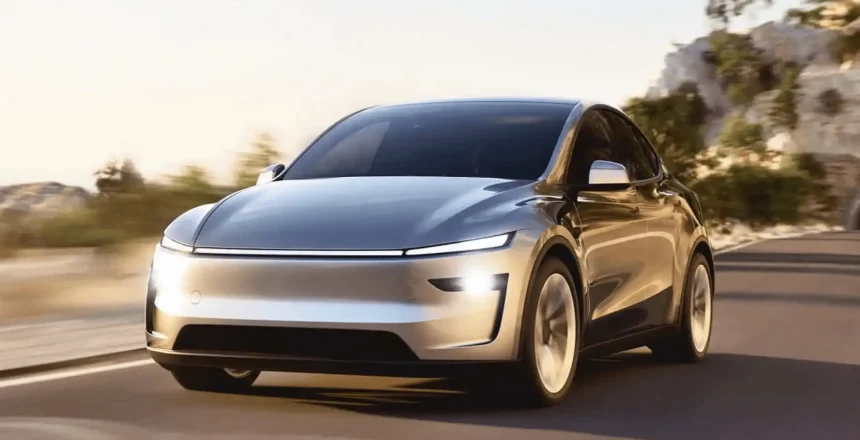
- Product Refreshes: Tesla has introduced updated versions of the Model 3 and Model Y, featuring improved battery technology, extended range, and enhanced Autopilot capabilities.
- Autonomous Driving Push: Tesla is aggressively developing its Full Self-Driving (FSD) technology, despite regulatory hurdles and ongoing debates about the safety and feasibility of a camera-only approach.
- Optimus Robot Development: Musk claims Tesla’s humanoid robots could generate “north of $10 trillion in revenue
- Energy and Software Innovation: Beyond vehicles, Tesla’s energy storage solutions, solar products, and software updates continue to bolster its diversified business model.
Recent Developments Impacting Tesla
In the past year, Tesla’s stock has experienced volatility driven by several newsworthy events:
- Regulatory and Safety Concerns: Recalls—ranging from issues with the tire pressure monitoring system to software glitches affecting driver-assist features—have periodically dampened investor sentiment. For example, a recall affecting nearly 700,000 vehicles over a TPMS fault raised questions about quality control and safety oversight.
- Political and Public Controversies: Elon Musk’s high-profile political engagements, including his controversial support for certain political figures and policy proposals, have generated mixed reactions among investors and the public alike. These controversies, while creating short-term stock fluctuations, have also contributed to Tesla’s media prominence.
- Technological Advancements: On the positive side, announcements regarding advancements in FSD, the Cybercab/Robotaxi unveiling, and optimistic comments by key analysts (like Dan Ives) have fueled bullish speculation about future growth.
Key Factors Influencing Tesla’s Stock Price by 2025
The global EV market is projected to grow at a 15% CAGR through 2025. The future trajectory of Tesla’s stock price will be determined by a complex interplay of internal developments and external market factors. Here are the primary drivers to consider:
Market and Industry Trends
- EV Adoption and Global Transition: The global push toward decarbonization and a sustainable energy future is expected to sustain long-term demand for EVs. Tesla’s leading role in this transition positions it to benefit from rising consumer and regulatory interest in green transportation.
- Technological Disruption: Advances in battery technology, energy storage, and autonomous driving are set to revolutionize not only the automotive sector but also energy markets. Tesla’s continuous innovation in these fields could drive higher revenues and margins in the near future.
- Competitive Landscape: The EV market is increasingly crowded. Competitors like BYD, Rivian, and traditional automakers (e.g., Ford and GM) are ramping up their EV offerings. Tesla’s ability to maintain technological and manufacturing leadership will be crucial to defending its market share.
Monetization Strategies and Revenue Streams
- Vehicle Sales and Margins: Although Tesla’s vehicle sales remain its core revenue generator, the company is also exploring additional monetization strategies such as:
- Autonomous Ridehailing (Tesla Network): The anticipated launch of a self-driving robo-taxi service could open a significant new revenue stream if regulatory approval and technological hurdles are overcome. Analysts like Dan Ives suggest that the autonomous and AI opportunities alone could add trillions in value.
- Energy Products and Software Services: Tesla’s energy storage solutions, solar installations, and over-the-air software upgrades provide recurring revenue and cross-selling opportunities.
Regulatory Environment and Geopolitical Considerations
- Government Incentives and Tariffs: Changes in government policies—such as EV tax incentives, import tariffs (especially in key markets like China and the U.S.), and environmental regulations—can have an outsized impact on Tesla’s bottom line. For example, favorable policies under a Trump administration have been credited with potentially streamlining regulatory hurdles for Tesla’s FSD initiatives.
- Safety and Compliance Scrutiny: Ongoing investigations by agencies like the NHTSA and recalls related to safety features may pose short-term headwinds, affecting investor confidence.
Competitive and Technological Landscape
- Autonomous Driving Race: Tesla’s aggressive push toward full autonomy, despite challenges, could be a game changer if it proves successful. However, competitors employing alternative technologies (such as LIDAR-based systems) present a formidable challenge.
- Innovation vs. Execution: Tesla’s success hinges on its ability to translate innovative ideas into reliable, mass-market products. Execution risks—ranging from production delays to quality issues—must be closely monitored.
Market Sentiment and Investor Perception
Public Opinion and Media Coverage
Investor sentiment toward Tesla is deeply influenced by media narratives and public opinion. Over the past year:
- Positive Coverage: Headlines highlighting Tesla’s breakthroughs in autonomous driving and its bold vision for a sustainable future have bolstered optimism. Analysts like Dan Ives have raised bullish price targets, citing potential for rapid growth driven by AI and FSD technologies.
- Negative Headlines: Conversely, reports of recalls, quality control issues, and controversies surrounding Elon Musk’s political statements have generated skepticism. High-profile bearish takes—such as those from investor Ross Gerber, who warned of a potential 50% drop in stock price—underscore the stock’s volatility.
Broader Economic and Political Influences
Tesla’s stock does not exist in isolation; it is also subject to broader economic and political forces:
- Economic Uncertainty: Fluctuations in consumer spending, global supply chain challenges, and inflationary pressures can impact vehicle sales and investor risk appetite.
- Political Dynamics: Changes in U.S. policy—particularly under a Trump or Trump-aligned administration—can provide tailwinds for Tesla’s autonomous initiatives, as seen in optimistic analyst reports suggesting that a “Trump bump” could accelerate growth.
Impact of Company Leadership and Key Personalities
Elon Musk’s Influence
Elon Musk is not only the face of Tesla but also a significant driver of investor sentiment:
- Visionary Leadership: Musk’s bold vision and willingness to take risks have long been celebrated by Tesla enthusiasts and tech investors. His ambitious goals for autonomous driving, space exploration via SpaceX, and revolutionary energy products continue to excite markets.
- Controversial Persona: However, Musk’s high-profile ventures outside Tesla—such as his involvement in the Trump administration’s policy initiatives and his unpredictable public statements—can create volatility. While some investors view these as distractions, others see them as part of a broader strategy to disrupt traditional industries.
- Execution Risk: Investors keep a close eye on Musk’s ability to balance his multiple ventures. If his attention becomes too divided, Tesla’s operational execution may suffer, leading to potential declines in vehicle sales or delayed technological rollouts.
Key Executives and Company Culture
Beyond Musk, Tesla’s leadership team and company culture play critical roles:
- Engineering Excellence: Tesla’s engineering prowess has enabled rapid innovation in battery technology, autonomous systems, and manufacturing processes. Maintaining this edge is essential for staying ahead of competitors.
- Investor Confidence: The management’s ability to navigate recalls, production challenges, and regulatory scrutiny also impacts investor sentiment. Consistent, transparent communication during earnings calls and investor updates helps reinforce confidence, even during turbulent times.
Technical Analysis and Short-Term Catalysts
Trend Analysis

Notably, the stock had previously peaked in the $460 to $480 range before entering a pronounced downtrend, and it is now approaching a significant support level around $280. This decline is characterized by a series of lower highs and lower lows, indicating sustained bearish momentum throughout the year.
Support & Resistance Levels
The $280 level appears to be a critical support zone where buyer interest could emerge, and if the downtrend continues, a psychological barrier may also form around $250. On the upside, short-term resistance is observed around $320, where selling pressure might intensify, while a major resistance level at $360 has historically marked a reversal point for the stock.
Volumen-Analyse
The trading volume has been notably high at around 56.63 million, which is above average. This increased volume on days when the stock declines suggests that sellers are dominating the market, further reinforcing the bearish sentiment.
Potential Trading Strategy
The technical analysis points to a confirmed downtrend for Tesla, and investors should exercise caution before considering long positions. If the $280 support level holds, a short-term rebound might occur; however, if the price falls below this level, further downside toward $250 is a possibility. A potential trade strategy would be to wait for a clear bullish reversal signal, such as a hammer candle or a bullish engulfing pattern near $280, or alternatively, to look for a breakout above the $320 resistance level before initiating long positions.
Short-Term Catalysts
Several events in the next 12–18 months could serve as catalysts for Tesla’s stock:
- Earnings Reports: Quarterly earnings that beat expectations—especially in terms of vehicle deliveries, margins, and progress on FSD—could propel the stock higher.
- Product Launches and Updates: Announcements regarding new vehicle models, software updates, or the anticipated launch of the Cybercab/Robotaxi service could trigger bullish runs.
- Regulatory Approvals: Any positive news regarding regulatory approvals for FSD or easing of tariffs in key markets like China would boost investor confidence.
- Market Corrections: Technical analysts suggest that if Tesla’s stock experiences a pullback to key support levels (around $250–$280), it might present a buying opportunity for long-term investors.
Analysts’ Forecasts and Outlook to 2025
The spectrum of forecasts for Tesla’s stock price by 2025 ranges from bullish optimism to cautious pessimism. Here, we summarize the two dominant scenarios:
The Bullish Scenario
- Price Targets and Upside Potential:
- Wedbush Analyst Dan Ives has raised his price target from $400 to $515, with a “bull case” scenario reaching as high as $650 by 2025. Ives believes that breakthroughs in autonomous driving and AI—especially if accelerated under a favorable regulatory environment—could unlock unprecedented value for Tesla.
- Optimistic Growth Projections: In this scenario, Tesla’s market cap could approach or even exceed $2 trillion if the company successfully scales its autonomous ridehailing service and capitalizes on growing demand in key markets such as China.
- Catalysts: A rapid rollout of FSD, favorable government policies (possibly under a Trump-aligned administration), and continued strong EV demand could all contribute to a steep upward trend.
The Bearish Scenario
- Downside Risks and Cautions:
- Investor Skepticism: Some prominent voices, such as investor Ross Gerber, have warned that Tesla’s stock is overvalued and could suffer significant declines—potentially a 50% drop—if production challenges, quality issues, or a slowdown in vehicle sales materialize.
- Valuation Concerns: Tesla currently trades at premium multiples relative to traditional automakers. Should growth expectations fail to materialize, a correction could be severe, leading to sharp declines in share price.
- Catalysts for a Pullback: Increased competition, further recalls or regulatory setbacks, and geopolitical tensions (e.g., trade disputes with China) could all trigger a market reassessment of Tesla’s lofty valuation.
| Forecaster | 2025 Price Target | Rationale |
|---|---|---|
| JPMorgan | $135 | Overvaluation concerns and slowing EV sales. |
| Wedbush | $515–$650 | Regulatory tailwinds and FSD breakthroughs. |
| Morgan Stanley | $400 | Balanced view on AI potential and competition. |
| Economy Forecast Agency | $1,109 | Extreme bullish case for tech dominance. |
Synthesizing the Forecasts
While the bullish outlook centers on transformative technologies and rapid market expansion, the bearish view emphasizes execution risk and external headwinds. Most analysts agree that—given the speculative nature of these forecasts—investors should interpret these targets as directional signals rather than guarantees. It’s essential to remember that any prediction for 2025 is inherently speculative and subject to rapid change in such a dynamic industry.
Risks and Challenges for Tesla in the Near Future
Investing in Tesla comes with considerable risk, despite its strong market position and innovative edge. Some of the major challenges include:
Regulatory and Safety Challenges
- Recall and Safety Issues:
Recalls related to safety features (such as the tire pressure monitoring system and Autopilot warnings) can damage brand reputation and erode investor confidence. These issues are compounded by regulatory scrutiny, which may lead to fines or operational constraints. - Autonomous Driving Hurdles:
The path to fully autonomous driving is fraught with technological, regulatory, and safety challenges. Any significant setback in FSD progress could have a negative impact on investor sentiment and long-term revenue projections.
Competitive Pressures
- Rising Competition:
With traditional automakers and new EV startups ramping up their efforts, Tesla faces intense competition in key markets. Competitors employing alternative technologies (like LIDAR) may capture market share if Tesla’s camera-only approach falls short. - Innovation vs. Imitation:
As more companies invest in battery technology, energy storage, and autonomous systems, Tesla’s competitive advantage may be challenged, requiring continuous innovation and efficient execution.
Leadership and Execution Risks
- Musk’s Divided Focus:
Elon Musk’s involvement in multiple high-profile ventures means that his attention is split. Any misstep or distraction—whether from political engagements or from ventures like SpaceX or xAI—could adversely affect Tesla’s performance. - Production and Supply Chain Issues:
Global supply chain disruptions, rising raw material costs, and production bottlenecks could impede Tesla’s ability to meet delivery targets, ultimately affecting revenue and margins.
Macroeconomic and Geopolitical Factors
- Economic Uncertainty:
Broader economic trends such as inflation, recession risks, and fluctuations in consumer spending can impact vehicle sales. Investors should be mindful that macroeconomic headwinds could dampen growth projections. - Trade and Tariff Issues:
Tesla’s global supply chain is sensitive to geopolitical shifts. Tariffs, especially between major markets like the U.S. and China, could affect pricing and profitability.
Conclusion: What Should Investors Watch For?
As we look toward 2025, the Tesla stock price prediction remains a dynamic and multifaceted question. Key takeaways include:
- Transformative Potential:
Tesla’s continued innovation in electric vehicles, energy solutions, and autonomous driving offers immense upside potential. If breakthroughs in FSD and AI occur as some analysts predict, Tesla’s valuation could skyrocket. - Significant Risks:
On the flip side, challenges related to recalls, regulatory scrutiny, rising competition, and execution risks—especially given Elon Musk’s divided focus—could result in sharp corrections. Investors should weigh these risks carefully. - Technical and Market Signals:
Short-term technical indicators such as moving averages, RSI, and volume patterns should be monitored alongside fundamental developments. A pullback to key support levels (around $350) might represent a buying opportunity, while sustained upward momentum could validate the bullish price targets. - Analyst Divergence:
The wide range of analyst forecasts—from bullish targets around $650 (or even $700) to bearish warnings of a 50% decline—highlights the speculative nature of Tesla’s stock. Investors are advised to maintain a diversified portfolio and consider professional financial advice before making any investment decisions.