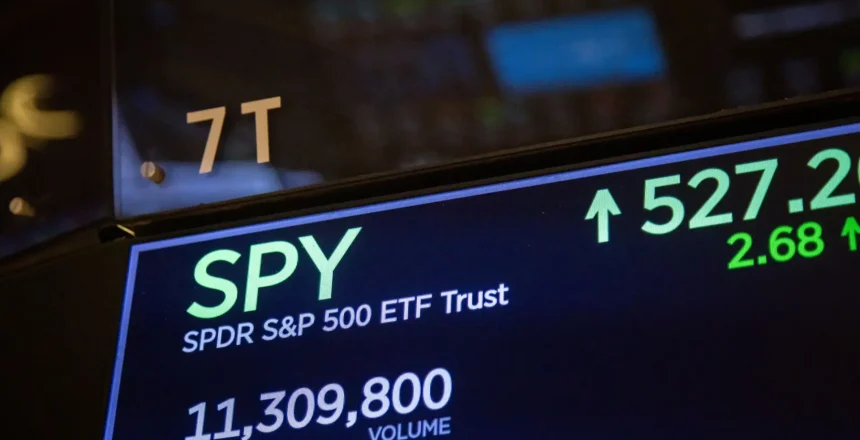
SPY leveraged ETFs offer sophisticated investors the ability to amplify their exposure to S&P 500 movements, potentially doubling or tripling daily returns without the complexity of margin accounts or derivatives trading. These financial instruments have gained significant popularity among traders seeking enhanced market exposure. However, they come with substantial risks that every investor must understand before proceeding.
Unlike traditional SPY shares that track the S&P 500 on a one-to-one basis, leveraged ETFs use derivatives, swaps, and borrowed capital to achieve their amplified performance targets. While these funds can generate impressive returns during trending markets, their daily reset mechanism and compounding effects make them unsuitable for long-term buy-and-hold strategies.
What Are SPY Leveraged ETFs
SPY leveraged ETFs are specialized exchange-traded funds designed to deliver a multiple of the daily performance of the S&P 500 index. Daily performance is represented by the SPDR S&P 500 ETF Trust (SPY). These funds typically target 2x or 3x the daily returns of their underlying index. Meaning, a 1% movement in SPY should theoretically result in a 2% or 3% movement in the leveraged ETF.
The mechanism behind these funds involves sophisticated financial engineering using derivatives such as futures contracts, swaps, and options. Fund managers also employ borrowing strategies to amplify exposure without requiring investors to hold equivalent cash positions. This approach allows retail investors to access complex trading strategies that were previously available only to institutional investors or those with significant margin accounts.
A critical aspect of leveraged ETFs is their daily reset mechanism. Each trading day, these funds rebalance their portfolios to maintain the targeted leverage ratio based on that day’s net asset value (NAV). This daily reset ensures the intended leverage factor is preserved for each individual trading session. It also creates compounding effects that can cause long-term returns to deviate significantly from the expected multiple of the underlying index performance.
Top SPY Leveraged ETF Options
When selecting a SPY leveraged ETF, investors should consider several key factors. Expense ratios, average daily trading volume, assets under management (AUM), and tracking accuracy are all crucial considerations. Higher volume and larger AUM typically indicate better liquidity and tighter bid-ask spreads. Tight spreads can reduce trading costs and improve execution quality.
| Fund | Ticker | Leverage | Aufwandsquote | AUM | Avg Daily Volume |
|---|---|---|---|---|---|
| ProShares Ultra S&P500 | SSO | 2x | 0.89% | $1.2B | 2.5M shares |
| Direxion Daily S&P 500 Bull 2x | SPUU | 2x | 0.45% | $180M | 85K shares |
| Direxion Daily S&P 500 Bull 3x | SPXL | 3x | 0.95% | $2.8B | 15M shares |
| ProShares UltraPro S&P500 | UPRO | 3x | 0.91% | $1.9B | 8M shares |
2x Leveraged S&P 500 ETFs
ProShares Ultra S&P 500 (SSO) stands out as the most liquid option in the 2x leveraged category, with the highest daily volume and substantial assets under management. This fund seeks daily investment results that correspond to 200% of the daily performance of the S&P 500 index. SSO’s high liquidity makes it suitable for both small retail trades and large institutional positions. It typically exhibits tight bid-ask spreads that minimize trading costs.
Direxion Daily S&P 500 Bull 2x Shares (SPUU) offers the lowest expense ratio among 2x leveraged S&P 500 ETFs at 0.45%, significantly below industry averages. However, its lower AUM and trading volume may result in wider spreads and potential liquidity constraints during periods of market stress. For cost-conscious investors making smaller trades, SPUU’s fee advantage may outweigh liquidity concerns.
3x Leveraged S&P 500 ETFs
Direxion Daily S&P 500 Bull 3x Shares (SPXL) represents the most liquid option for 3x leveraged exposure to the S&P 500. It holds the largest AUM in this category and substantial daily trading volume. SPXL seeks daily investment results of 300% of the performance of the S&P 500 index. This makes it an extremely volatile investment that can produce dramatic gains or losses in short periods.
ProShares UltraPro S&P 500 (UPRO) offers competitive fees among 3x leveraged funds while maintaining strong liquidity characteristics. With its focus on delivering triple the daily performance of the S&P 500, UPRO employs an aggressive derivatives strategy that requires constant monitoring and rebalancing by the fund’s management team.
Risiken und Überlegungen
Warning: Leveraged ETFs are designed for short-term trading and can result in significant losses even when the underlying index rises over longer periods due to volatility decay.
The most significant risk facing leveraged ETF investors is the daily compounding effect on long-term returns. This is also true amongst leveraged commodity ETFs. Because these funds reset their leverage daily, their performance over periods longer than one day can differ dramatically from the expected multiple of the underlying index’s return. This phenomenon, known as volatility decay, occurs regardless of the overall direction of the market.
Consider this example: If the S&P 500 falls 10% on Day 1, a 2x leveraged ETF would decline 20%. If the S&P 500 then rises 11.11% on Day 2 (returning to its original level), the 2x ETF would gain 22.22%. However, starting from its lower base after Day 1, the ETF would only recover to 97.78% of its original value, representing a 2.22% loss despite the underlying index being unchanged. Volatility decay becomes more pronounced in choppy, range-bound markets where the underlying index experiences frequent direction changes.
Liquidity Risk Alert: Funds with AUM below $50 million may experience wider bid-ask spreads and reduced trading volume during market stress, potentially making it difficult to exit positions at favorable prices.
Additional risks include tracking error, where the fund’s daily performance deviates from its target due to fees, timing differences, and derivatives pricing. Higher expense ratios, typically ranging from 0.89% to 0.95% for leveraged ETFs compared to 0.03% to 0.09% for traditional S&P 500 funds, compound over time and reduce net returns.
Interest rate changes can also affect leveraged ETF performance, as these funds often use borrowed capital to achieve their leverage targets. Rising rates increase borrowing costs, which can drag on fund performance independent of the underlying index movements.
Fees and Costs Analysis
The cost structure of leveraged ETFs significantly exceeds that of traditional index funds, reflecting the complexity and active management required to maintain leverage targets. Understanding these costs is crucial for calculating potential returns and determining optimal holding periods.
| Cost Component | Traditional SPY | 2x Leveraged ETFs | 3x Leveraged ETFs |
|---|---|---|---|
| Aufwandsquote | 0.09% | 0.45% – 0.89% | 0.91% – 0.95% |
| Bid-Ask Spread | 0.01% | 0.02% – 0.05% | 0.03% – 0.08% |
| Annual Impact | ~0.10% | ~0.50% – 0.95% | ~0.95% – 1.05% |
Trading costs extend beyond expense ratios to include bid-ask spreads, which tend to be wider for leveraged ETFs due to their complexity and the underlying derivatives markets. Higher-volume funds like SSO and SPXL typically maintain tighter spreads, while smaller funds may have spreads that significantly impact short-term trading profitability.
The higher fees compound with leverage effects, meaning that a 1% annual fee on a 3x leveraged position effectively represents a 3% drag on the underlying exposure. Over time, these costs can substantially erode returns, particularly in sideways markets where volatility decay is already working against investors.
For different holding periods, the total cost of ownership varies significantly. Intraday trades primarily face bid-ask spread costs, while positions held for weeks or months bear the full weight of management fees and financing costs. This cost structure reinforces the short-term nature of these investment vehicles.
Alternatives to SPY Leveraged ETFs
Several alternatives exist for investors seeking leveraged exposure to the S&P 500, each with distinct advantages and disadvantages compared to leveraged ETFs.
S&P 500 futures and options provide direct access to leverage without daily reset mechanisms. E-mini S&P 500 futures offer approximately 20:1 leverage with lower costs for larger positions, but they require futures trading approval and margin accounts. Options strategies like buying calls or puts can provide leveraged exposure with defined risk, though they involve expiration dates and time decay.
Margin trading SPY directly allows investors to borrow against their portfolio to purchase additional shares. This approach avoids daily reset issues but requires margin approval and subjects investors to margin calls if positions move against them. Interest costs on borrowed funds can be lower than leveraged ETF fees for larger positions.
Inverse leveraged ETFs like ProShares UltraShort S&P500 (SDS) and ProShares UltraPro Short S&P500 (SPXU) provide bearish exposure to the S&P 500 with -2x and -3x daily target returns respectively. These funds serve as alternatives to short selling or put options for expressing negative market views.
Sector-specific leveraged ETFs offer concentrated exposure to particular market segments. Funds tracking the technology select sector index, energy select sector index, or industrials select sector index with leverage can provide targeted exposure to specific economic themes while maintaining the liquidity and simplicity of ETF structures.
Häufig gestellte Fragen
What is a SPY leveraged ETF?
A SPY leveraged ETF is a fund that aims to deliver 2x or 3x the daily performance of the SPDR S&P 500 ETF (SPY). It uses derivatives, swaps, and borrowing strategies to amplify exposure to the index’s movements.
How is a leveraged ETF different from buying SPY on margin?
While both involve leverage, a leveraged ETF does not require a margin account or margin calls. Instead, the fund itself manages leverage through derivatives. Margin trading gives investors more flexibility on holding periods, whereas leveraged ETFs reset daily and are better suited for short-term trading.
Why do leveraged ETFs reset daily?
The daily reset ensures the fund maintains its stated leverage ratio (2x or 3x) based on that day’s performance. However, it also means long-term returns can differ significantly from the expected multiple of the S&P 500 due to compounding effects
Are SPY leveraged ETFs good for long-term investors?
Generally, no. They are designed for short-term strategies, such as intraday or swing trading. Over longer periods, volatility decay and fees can cause large deviations from the expected performance.
What is volatility decay?
Volatility decay occurs when the compounding effects of daily resets lead to long-term underperformance, especially in sideways or choppy markets. Even if the S&P 500 returns to its initial level, a leveraged ETF may finish lower due to this compounding.
What are the biggest risks of SPY leveraged ETFs?
Key risks include volatility decay, high expense ratios, liquidity issues in smaller funds, and tracking errors. Additionally, their extreme sensitivity to daily market moves can lead to rapid gains but also steep losses.
Are there alternatives to leveraged ETFs for gaining leverage on SPY?
Yes. Alternatives include trading S&P 500 futures contracts, using SPY options, or buying SPY on margin. Inverse leveraged ETFs also exist for bearish exposure, offering -2x or -3x daily returns.