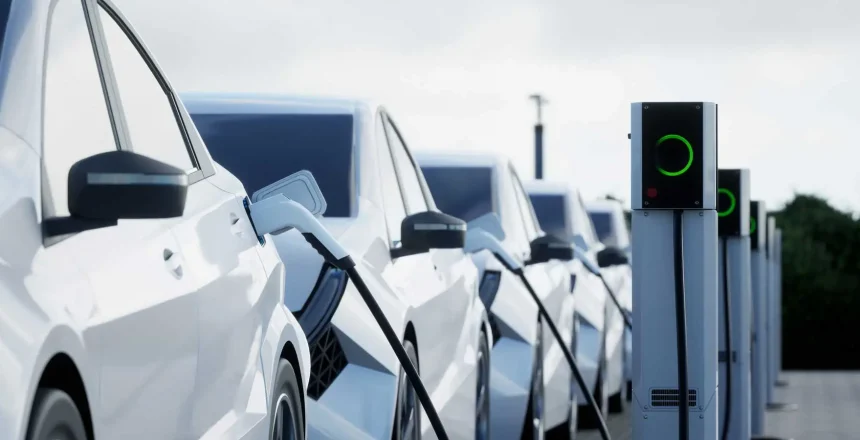
The electric vehicle revolution is accelerating, with EVs capturing 18% of global new vehicle sales in 2023 and projections suggesting this could reach 40% by 2030. For investors looking to capitalize on this transformative trend, electric vehicle ETFs offer a compelling way to gain diversified exposure to the growing EV market without the risks of picking individual winners like Tesla or Rivian.
What Are Electric Vehicle ETFs?
Electric vehicle ETFs are specialized investment funds that track a basket of companies involved in various parts of the electric vehicle value chain. Rather than investing directly in a single company, these ETFs provide diversified exposure to EV manufacturers, battery producers, charging infrastructure companies, and autonomous driving technology developers.
The primary benefit of EV ETFs lies in their ability to capture the growth potential of the electric vehicle sector while mitigating the risks associated with individual stock picking. The EV market remains highly competitive and rapidly evolving, making it challenging for individual investors to identify long term winners. By investing in an ETF, you gain exposure to multiple companies across the entire EV ecosystem.
These funds typically include holdings in several key categories:
- EV Manufacturers: Companies like Tesla, NIO, BYD, and traditional automakers transitioning to electric
- Battery Technology: Producers of lithium-ion batteries and related components
- Charging Infrastructure: Networks and technology providers for EV charging stations
- Raw Materials: Mining and refining companies for lithium, cobalt, nickel, and copper
- Autonomous Technology: Software and semiconductor companies enabling self-driving capabilities
The diversification offered by EV ETFs provides significant risk mitigation compared to investing in single EV stocks. While individual companies may face technology disruption, regulatory challenges, or competitive pressures, a diversified fund can weather these sector-specific risks more effectively.
Top Electric Vehicle ETFs to Consider
The EV ETF landscape offers several compelling options for investors, with asset sizes ranging from $25 million to over $1 billion across major funds. Each fund takes a different approach to capturing EV market growth, from pure-play electric vehicle companies to broader mobility and technology themes.
Global X Autonomous & Electric Vehicles ETF (DRIV)
The Global X Autonomous & Electric Vehicles ETF stands out as one of the most comprehensive funds in the EV space, with 75 holdings focusing on both autonomous and electric vehicle technologies. This fund tracks the Solactive Autonomous & Electric Vehicles Index and offers broad exposure to companies driving the future of transportation.
Key characteristics include:
- Holdings: 75 companies across EV and autonomous driving technologies
- Expense Ratio: 0.68% annually
- Focus: Semiconductors, batteries, components, and software companies
- Geographic Exposure: Global with significant U.S. and international representation
The fund’s diversified approach makes it suitable for investors seeking exposure to both current EV growth and future autonomous driving innovations. However, the broader technology focus may include companies with limited direct EV exposure.
KraneShares Electric Vehicles & Future Mobility ETF (KARS)
KARS offers a focused approach to EV investing with 50+ holdings tracking the Bloomberg Electric Vehicles Index. This fund emphasizes companies directly involved in electric vehicle production and the supporting supply chain, making it a more targeted investment than broader technology-focused alternatives.
Notable features include:
- Index: Bloomberg Electric Vehicles Index
- Assets: $75+ million AUM
- Expense Ratio: 0.72% per year
- Geographic Focus: Global EV supply chain with significant China exposure
- Top Holdings: MP Materials, Tesla, Chinese automakers
KARS appeals to investors seeking more direct EV exposure with less dilution from broader technology companies. The fund’s inclusion of Chinese EV manufacturers provides access to the world’s largest EV market but introduces additional regulatory and currency risks.
SPDR S&P Kensho Smart Mobility ETF (HAIL)
HAIL takes a U.S.-focused approach to smart transportation and mobility companies, offering a smaller but more concentrated investment in American innovation. With approximately $25 million in assets under management, this fund provides access to mobility service providers and transportation technology companies.
Key attributes:
- Geographic Focus: U.S. smart transportation companies
- Assets: Approximately $25 million AUM
- Expense Ratio: 0.45% (lowest among major EV ETFs)
- Holdings: Nvidia, Cummins, Ambarella, mobility services
- Strategy: Smart mobility and transportation technology
The fund’s smaller asset size may result in lower liquidity compared to larger alternatives, but the competitive expense ratio and focused U.S. strategy appeal to investors seeking domestic EV exposure at minimal cost.
iShares Self-Driving EV and Tech ETF (IDRV)
IDRV focuses specifically on autonomous driving and self-driving electric vehicle enablers, providing targeted exposure to the intersection of electric and autonomous vehicle technologies. The fund tracks the NYSE FactSet Global Autonomous Driving and Electric Vehicle Index with 50 holdings.
Distinguishing features:
- Index: NYSE FactSet Global Autonomous Driving and Electric Vehicle Index
- Assets: $160+ million AUM
- Holdings: 50 companies including Tesla, NIO, Albemarle
- Expense Ratio: 0.47% annually
- Focus: Autonomous driving and EV technology convergence
IDRV suits investors who believe the future of transportation lies in the convergence of electric and autonomous technologies. The fund’s balanced approach between current EV leaders and future autonomous driving enablers provides exposure to multiple growth vectors.
Global X Lithium & Battery Tech ETF (LIT)
LIT takes a specialized approach by focusing on lithium mining, refining, and battery manufacturing companies rather than finished vehicle producers. As the largest EV-related ETF with over $1 billion in assets, this fund provides exposure to the critical materials and components that power electric vehicles.
Standout characteristics:
- Focus: Lithium mining, refining, battery manufacturing
- Assets: Over $1 billion (largest EV-related ETF)
- Holdings: 40 companies led by Albemarle and Tesla
- Expense Ratio: 0.75%
- Strategy: Critical materials and battery supply chain
LIT appeals to investors who want to capture the growing demand for battery materials without direct exposure to vehicle manufacturers. The fund’s commodity focus provides a different risk-return profile compared to automaker-heavy alternatives.
Key Evaluation Criteria for EV ETFs
When evaluating EV ETFs for your portfolio, several critical factors should guide your decision-making process. Understanding these criteria will help you select funds that align with your investment objectives, risk tolerance, and long term goals.
Expense Ratio Comparison
Cost efficiency plays a crucial role in long term returns, with expense ratios across major EV ETFs ranging from 0.45% to 0.75%. Lower fees compound over time, making cost-conscious fund selection particularly important for buy-and-hold investors.
| Fund | Aufwandsquote | Cost per $10,000 Investment |
|---|---|---|
| HAIL | 0.45% | $45 annually |
| IDRV | 0.47% | $47 annually |
| DRIV | 0.68% | $68 annually |
| KARS | 0.72% | $72 annually |
| LIT | 0.75% | $75 annually |
Asset Size and Liquidity Considerations
Fund size directly impacts trading efficiency and bid-ask spreads. Larger funds typically offer better liquidity and tighter spreads, making them more suitable for frequent trading or large position sizes. Asset sizes range from HAIL’s $25 million to LIT’s $1+ billion, affecting market price stability and trading costs.
Geographic Exposure Analysis
Different funds offer varying geographic exposure, from HAIL’s U.S.-focused approach to KARS’s significant China exposure. Global funds provide broader diversification but may introduce currency and regulatory risks from international markets.
Sector Focus and Diversification
EV ETFs range from pure-play electric vehicle companies to broader mobility and autonomous driving themes. Consider whether you want focused EV exposure or prefer broader technology diversification that may include tangentially related companies.
Top Holdings Concentration
Review each fund’s largest positions to understand concentration risk. Some ETFs have significant exposure to individual companies like Tesla, while others maintain more balanced weightings across multiple holdings.
Investment Considerations and Risks
Investing in EV ETFs involves several unique risks and considerations that potential investors must understand before committing capital. While the long term outlook for electric vehicles remains positive, the path forward includes significant volatility and uncertainty.
Market Volatility and Technology Disruption
The EV sector experiences higher volatility than traditional automotive investments due to rapid technological change and evolving consumer preferences. Battery technology advancements, such as solid-state batteries, could quickly shift competitive advantages between companies, affecting ETF performance.
Technology risk extends beyond individual companies to entire subsectors. For example, breakthroughs in hydrogen fuel cells or alternative energy storage could disrupt current lithium-based battery technology, impacting battery-focused ETFs like LIT.
Regulatory Changes and Government Policy
Government policies significantly influence EV adoption through incentives, emissions regulations, and infrastructure investment. Changes in federal tax credits, state-level EV mandates, or international trade policies can dramatically affect sector performance.
The regulatory landscape varies globally, with different regions adopting different approaches to EV transition. Funds with international exposure face additional complexity from varying regulatory environments and policy coordination challenges.
Supply Chain Dependencies
The EV industry relies heavily on critical materials like lithium, cobalt, nickel, and rare earth elements. Supply chain disruptions, mining restrictions, or geopolitical tensions in resource-rich regions can create bottlenecks that affect the entire industry.
Approximately 70% of global cobalt production comes from the Democratic Republic of Congo, creating a significant supply chain concentration risk. Similar dependencies exist for other critical materials, making the EV sector vulnerable to resource availability and pricing volatility.
Currency and Emerging Market Exposure
Global EV ETFs often include significant exposure to Chinese companies and other emerging markets. Currency fluctuations, regulatory changes in foreign jurisdictions, and political instability can introduce additional layers of risk beyond fundamental business performance.
China’s unique financial market structure, including restrictions on foreign ownership and government intervention in business operations, creates specific risks for funds with heavy Chinese EV exposure.