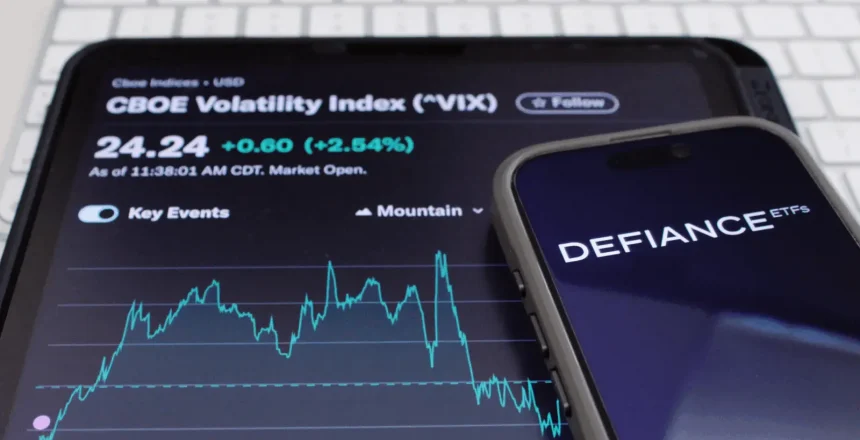
When market turbulence strikes and the S&P 500 plunges, one financial instrument often surges dramatically – VIX ETFs. These specialized exchange traded products offer investors a way to profit from or hedge against extreme volatility, but they come with unique risks that can potentially lose significant principal value for unprepared investors.
The CBOE Volatility Index, commonly known as the fear index, measures expected volatility in the S&P 500 over the next 30 days. While you cannot invest directly in the VIX index itself, VIX ETFs provide exposure to this volatility through futures contracts. However, these financial instruments behave very differently from traditional ETFs that track stocks or bonds.
What Are VIX ETFs and How Do They Work
VIX ETFs are exchange-traded funds that track VIX futures indexes rather than the spot VIX index directly. The Chicago Board Options Exchange calculates the VIX by measuring market’s expectation of future volatility based on S&P 500 index options prices. When investors fear market declines, they buy protective options, driving up implied volatility and the VIX higher.
Since the VIX measures expected volatility rather than an investable asset, VIX ETFs exist by holding VIX futures contracts. These futures contracts represent agreements to buy or sell volatility at specific future dates. Most VIX ETFs focus on VIX short term futures, typically holding monthly VIX futures contracts with one to two months until expiration.
The structure creates several important distinctions between VIX ETF types:
Traditional VIX ETFs operate under the Investment Company Act and hold futures directly. These funds track market volatility through systematic rolling of futures positions as contracts approach expiration.
Commodity Pool VIX ETFs function as commodity pool operators, offering different tax treatment but requiring K-1 forms for investors. These structures often provide more flexibility in futures management but complicate tax filings.
VIX ETNs (Exchange Traded Notes) are debt securities issued by financial institutions rather than investment companies. While they may track VIX futures indexes more precisely, they carry counterparty risk from the issuing bank.
The rolling process fundamentally impacts VIX ETF performance. As VIX futures contracts near expiration, funds must sell expiring contracts and buy longer-dated ones. This constant rolling creates exposure to the VIX futures curve shape, particularly the phenomenon known as contango.
Top VIX ETFs in 2025
The VIX ETF landscape offers several distinct products targeting different volatility exposures and time horizons. Each fund employs different strategies for managing VIX futures exposure, resulting in varying risk and return profiles.
ProShares VIX Short-Term Futures ETF (VIXY) tracks the S&P 500 VIX Short-Term Futures Index, holding VIX futures with approximately 30 days to expiration. This ETF provides the most direct exposure to short-term market volatility expectations but suffers from significant contango drag during normal market conditions.
ProShares VIX Mid-Term Futures ETF (VIXM) offers exposure to VIX futures contracts with 4-7 months until expiration. The longer duration reduces sensitivity to daily VIX movements but also diminishes the fund’s effectiveness as a short-term hedge during volatility spikes.
iPath Series B S&P 500 VIX Mid-Term Futures ETN (VXZ) employs an ETN structure tracking mid-term VIX futures. While this eliminates tracking error from cash drag and management decisions, investors face credit risk from issuer Barclays and potential early redemption scenarios.
ProShares Ultra VIX Short-Term Futures ETF (UVXY) provides 1.5x leveraged exposure to the S&P 500 VIX Short-Term Futures Index. The leverage magnifies both gains during volatility spikes and losses during calm markets, making it suitable only for very short-term tactical positions.
| Fund | Aufwandsquote | Structure | Primary Exposure | Leverage |
|---|---|---|---|---|
| VIXY | 0.85% | ETF | 1-month VIX futures | 1x |
| VIXM | 0.85% | ETF | 4-7 month VIX futures | 1x |
| VXZ | 0.89% | ETN | 4-7 month VIX futures | 1x |
| UVXY | 0.95% | ETF | 1-month VIX futures | 1.5x |
These products serve different investment objectives within volatility trading strategies. Short-term VIX ETFs like VIXY respond most dramatically to sudden market stress but decay rapidly during stable periods. Mid-term products offer more stable exposure but with reduced hedging effectiveness.
Inverse VIX ETFs: Betting Against Volatility
Inverse VIX ETFs profit when market volatility declines, essentially betting against fear in the markets. These products capitalize on volatility’s natural tendency to revert from elevated levels back toward historical averages.
ProShares Short VIX Short-Term Futures ETF (SVXY) provides 0.5x inverse exposure to VIX short term futures. When the VIX futures curve is in contango and volatility remains subdued, SVXY benefits from both declining futures prices and positive roll yield as it systematically sells expensive near-term contracts and buys cheaper longer-dated ones.
-1x Short VIX Futures ETF (SVIX) offers full inverse exposure while incorporating protective VIX call options to limit losses during extreme volatility events. This hedging overlay helps manage the catastrophic risk that traditional inverse volatility strategies face during market crashes.
Simplify Volatility Premium ETF (SVOL) represents an actively managed approach, targeting -0.2x to -0.3x inverse exposure to VIX futures while collecting volatility risk premiums. This fund attempts to profit from volatility’s tendency to revert to lower levels over time.
The mathematical advantage of inverse VIX ETFs stems from volatility’s mean-reverting nature and the persistent contango in VIX futures markets. Historical data shows contango occurred in 49 of 60 months from April 2016 to early 2021, creating a structural tailwind for inverse positions.
During the extended low-volatility period from 2016-2019, inverse VIX ETFs generated substantial returns as the VIX remained below 20 for most months. Similarly, the 2021-2022 period saw strong performance until geopolitical tensions and inflation concerns elevated volatility levels.
However, inverse VIX ETFs carry extreme tail risk. The February 2018 “Volmageddon” event destroyed several inverse volatility products when the VIX spiked from 17 to 50 in a matter of days. The 2020 COVID-19 pandemic created similar conditions, with the VIX reaching levels above 80 for the first time since the 2008 financial crisis.
Sophisticated investors use inverse VIX ETFs primarily during confirmed low-volatility regimes with careful position sizing and stop-loss disciplines. The products work best when combined with broader portfolio strategies that can withstand occasional large losses.
Understanding Contango and Its Impact on VIX ETF Returns
Contango represents the most critical factor affecting long-term VIX ETF performance. This market condition occurs when VIX futures contracts trade above the spot VIX index, creating a upward-sloping curve where longer-dated contracts cost more than near-term ones.
The VIX futures curve typically exhibits contango because future volatility expectations tend to revert toward long-term averages around 20, even when current volatility is lower. Market makers also demand premium for holding volatility risk over extended periods, further steepening the curve.
When VIX ETFs roll their futures positions, they systematically sell cheaper expiring contracts and buy more expensive longer-dated ones. This “buy high, sell low” pattern creates negative roll yield that erodes fund value over time, even if the spot VIX remains stable.
Historical analysis demonstrates contango’s devastating impact on long VIX positions. A hypothetical $10,000 investment in a short-term VIX futures index would have declined below $500 over extended holding periods due to persistent contango drag. This mathematical reality makes VIX ETFs unsuitable for buy-and-hold investment strategies.
The contango effect varies by:
- Time to expiration: Shorter-dated contracts experience more severe contango impact
- Market conditions: Stress periods can temporarily create backwardation
- Volatility levels: Higher VIX levels often reduce contango steepness
- Seasonal factors: End-of-quarter positioning can influence curve shape
Term VIX futures indexes with longer average maturities reduce contango sensitivity but sacrifice responsiveness to volatility spikes. The VIX futures curve shape changes constantly, creating opportunities for tactical trading but making long-term holding extremely costly.
Understanding contango helps explain why VIX ETFs with “VIX” in their names don’t guarantee VIX index tracking performance. The structural necessity of using futures contracts rather than direct VIX exposure creates this fundamental tracking difference that investors must carefully consider.
Trading Strategies and Risk Management
Successful VIX ETF trading requires disciplined approaches that account for these products’ unique characteristics. Most profitable strategies involve short-term tactical positions rather than strategic allocations, with typical holding periods measured in days rather than months.
Volatility Spike Trading involves buying VIX ETFs ahead of anticipated market stress events, such as Federal Reserve meetings, earnings seasons, or geopolitical developments. This strategy works best when volatility is low (VIX below 20) and specific catalysts suggest near-term uncertainty.
Portfolio Hedging Applications use VIX ETFs as insurance against equity market declines. The negative correlation between VIX ETFs and stock markets during stress periods can offset portfolio losses, though the hedge ratio requires careful calibration.
Mean Reversion Strategies exploit volatility’s tendency to return to long-term averages. When the VIX exceeds 30-35, statistical analysis suggests elevated probability of decline toward normal levels around 20.
Professional Trading Approaches often combine VIX ETFs with options strategies to create more sophisticated risk/reward profiles. These may include selling VIX call options to generate income or buying protective puts to limit downside risk.
The actively managed nature of successful VIX ETF trading makes these products unsuitable for passive investors or those unable to monitor positions daily. Market conditions can change rapidly, turning profitable hedges into significant losses within hours.
VIX ETF Performance During Market Crises
Historical crisis analysis reveals both the potential benefits and limitations of VIX ETFs during extreme market stress. These products often deliver their strongest absolute returns during brief periods of acute volatility, but timing and duration significantly impact overall effectiveness.
2020 COVID-19 Pandemic provided the most dramatic recent example of VIX ETF performance during market crisis. As global markets processed the implications of pandemic lockdowns, the VIX spiked from approximately 15 in early February to over 80 in mid-March, reaching levels not seen since the 2008 financial crisis.
2008 Financial Crisis established VIX ETFs as potential portfolio hedges, though fewer products existed during this period. The VIX reached peaks above 80 as credit markets froze and equity markets declined over 50% from their highs.
2011 European Debt Crisis and Flash Crash demonstrated VIX ETF responsiveness to both fundamental economic stress and technical market disruptions. The sudden May 6, 2010 flash crash saw the VIX spike above 40 within minutes before rapidly reverting.
Recent Market Stress Events including the March 2023 Silicon Valley Bank collapse and subsequent regional banking concerns showed continued VIX ETF sensitivity to unexpected financial sector stress. While these events produced smaller volatility spikes than major crises, they demonstrated the ongoing utility of VIX products for tactical hedging.
Who Should Consider VIX ETFs
VIX ETFs serve specific purposes within sophisticated investment strategies but are inappropriate for most retail investors due to their complexity, volatility, and structural characteristics. Determining suitability requires honest assessment of trading capabilities, risk tolerance, and investment objectives.
Sophisticated investors with deep understanding of derivatives markets and futures pricing represent the primary target audience for VIX products.
Professional traders and portfolio managers often integrate VIX ETFs into broader tactical asset allocation strategies.
Institutional investors may employ VIX ETFs for specific purposes such as:
- Short-term portfolio protection during known risk events
- Completion strategies for broader volatility exposures
- Tactical overlays on long-term equity allocations
- Risk budget diversification across asset classes
Individual investors considering VIX ETFs should meet stringent criteria:
- Daily monitoring capability: VIX ETF positions require constant attention
- Technical analysis skills: Entry and exit timing demands chart reading ability
- Risk tolerance: Comfortable with potential 50%+ daily swings
- Tax sophistication: Understanding of complex tax implications
- Small position sizing: Never exceed 1-3% of total portfolio value
Warning against buy-and-hold strategies cannot be overstated. Past performance data consistently shows that holding VIX ETFs beyond short tactical periods virtually guarantees significant losses due to contango decay. Even during volatile market periods, the optimal holding periods typically measure in days or weeks rather than months.
Unsuitable investor profiles include:
- Retirement savers seeking long-term growth
- Conservative investors prioritizing capital preservation
- Those unable to actively manage positions
- Investors attracted solely by recent performance without understanding mechanics
- Anyone viewing VIX ETFs as traditional stock or bond alternatives