चाबी छीनना
- Recent data show moderating economic growth and rising downside risks to employment.
- Inflation has increased but is expected to see only temporary effects from tariffs and trade changes.
- Powell emphasized the unprecedented challenge of balancing inflation risks and employment risks.
- The Fed’s future moves will be guided by incoming data, avoiding any preset policy path.
Powell’s Speech On Economic Outlook
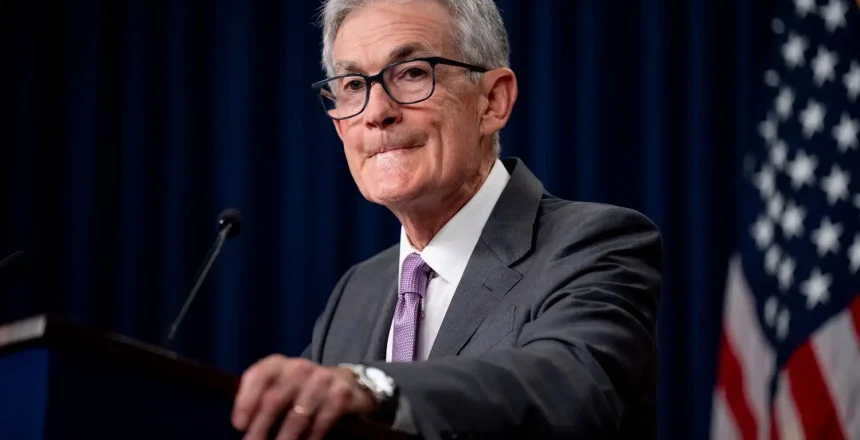
Federal Reserve Chair Jerome Powell’s speech yesterday at the Greater Providence Chamber of Commerce outlined a nuanced assessment of the U.S. economy for investors, business leaders, and policymakers. Against the backdrop of changing trade and immigration policies, Powell highlighted the resilience of the American economy. His speech underscored the Fed’s evolving strategy to manage heightened risks from both persistent inflation and employment softness.
Recent Economic Growth
Powell began by noting that U.S. GDP growth had slowed to around 1.5% over the first half of the year, down from 2.5% last year. The moderation primarily stems from weakening consumer demand and sustained softness in the housing sector. However, Powell pointed out a rebound in business investment, especially in equipment and intangibles, offering some positive momentum amid uncertainty.
Labor Market and Employment Downside Risks
Turning to employment, Powell described a labor market facing marked slowdown in both supply and demand. Unemployment edged up to 4.3% in August, and monthly job gains have dwindled to an average of just 29,000—a pace below the breakeven number needed to keep the unemployment rate steady. The “balance of risks” has tipped toward employment, compelling the Fed to act by trimming interest rates to shore up prospects.
Inflation Outlook
Inflation has reaccelerated, with headline PCE prices rising 2.7% over the past year and core prices up 2.9%. Powell attributed much of the pickup to higher tariffs, which he expects will have relatively short-lived effects distributed over several quarters. While near-term inflation expectations have risen, Powell argued that long-term inflation outlook remains broadly anchored at the Fed’s target of 2%.
Fed Policy
The most striking theme from Powell’s address was the Fed’s two-sided risk management approach. He highlighted the risk that easing policy too quickly might leave inflation unchecked, while keeping policy too restrictive could worsen labor market conditions. With these risks now balanced, the Fed responded by lowering rates—a move still viewed as modestly restrictive. Powell explicitly rejected any preset course, committing to ongoing assessment based on real-time data and evolving risks.
निष्कर्ष
Powell’s speech signals a period of heightened vigilance and adaptability for U.S. monetary policy. As the Fed balances transitory inflation pressures with rising employment risks, investors and policymakers should expect a data-driven, flexible approach for the remainder of 2025. Powell’s careful framing of two-sided risks and the shift toward a neutral policy stance serve as clear guidance for navigating the uncertain road ahead.